
"He Looks Like Him Again" — Chayse and Moose's Story
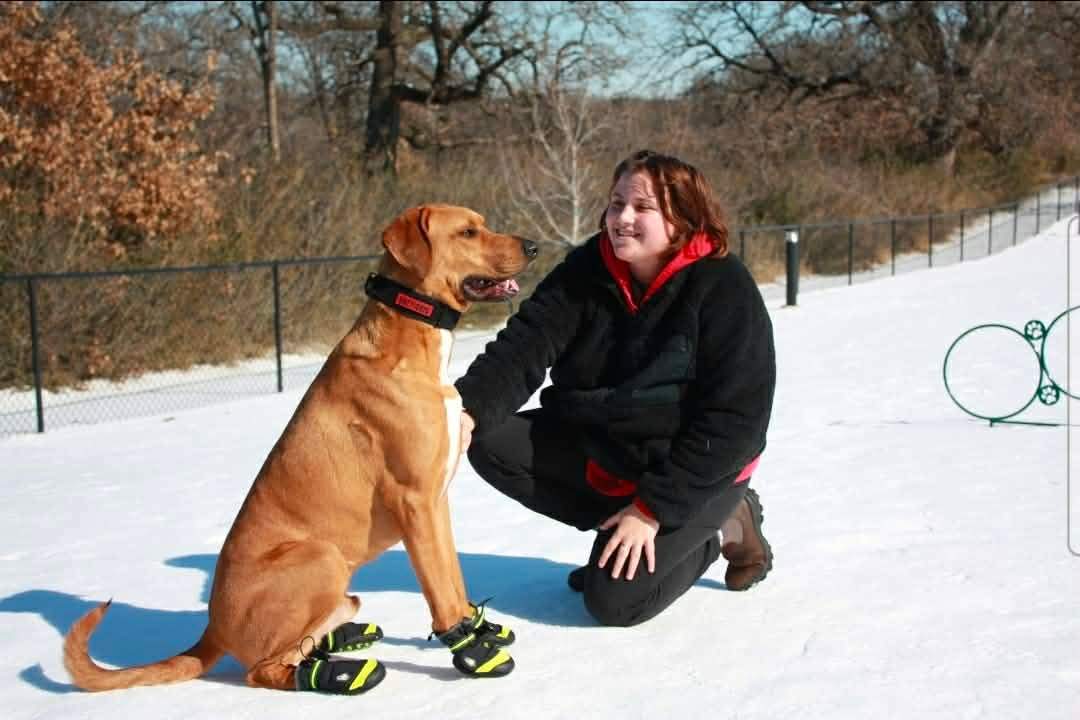
When Everything Changed
Moose was less than a year old when a black dog attacked him in the dark. Chayse didn't see it coming. "He climbed up me like a tree. He was terrified," she remembers. He was easygoing, happy, and on track to train as a service dog — a dog who could handle anything. Chayse figured a good night's sleep would shake it off.
Except it didn't.
Moose changed.
“The next day, his entire personality changed and he was terrified of everything.” The dog who used to relax in his own yard couldn't anymore. And, no longer able to calmly watch the world through the window, they had to keep the blinds and the door closed.
“I didn't know what to do about it.” Chayse was watching her service-dog-in-training unravel in real time, and she had no way out.
Inside the house, away from other dogs, Moose was still Moose. But the fear the dog attack caused was compounding into something bigger, and Chayse could feel it accelerating.
I need a trainer now, I don't know what to do about this.
Trying Everything, Getting Nowhere
So she went looking — and found no shortage of advice. Moose already had his obedience basics down: sit, down, stay, come. That was never the issue. The problem was that none of that training mattered the second another dog entered the picture.
She tried the exposure route, sitting outside dog parks so he could watch from a distance. It backfired immediately. Chayse remembers they would sit outside of dog parks to let him see other dogs, “but he barked and lunged the whole time. It wasn't safe. There was no way to do that without me getting hurt."
Frustrated and a little scared herself, she found a trainer on Facebook who looked good. “It was not everything that we hoped it would be.”
The method leaned entirely on food. Chayse was to let Moose look at whatever scared him, then reward him with a treat. But a terrified dog doesn't want a snack.
The trainer’s approach was “basically, have him look at it and feed him a treat, but he isn't that food motivated.”
“He would look at something he was scared of and then not want a treat." The plan didn't just fail to help — it made things noticeably worse. "Within a couple of months, he went from being scared of dogs to screaming at every dog, barking, and lunging.”
When Chayse raised concerns, she says she was met with blame instead of answers. “I can't stop him from screaming if he's not going to turn around and take a treat from me.” Moose wasn't the problem. The plan was. But it took months of watching him get worse before she trusted that instinct enough to act on it. “After a couple months of that, I was like, this is not working at all.”
What is getting a second opinion gonna hurt?
A Different Kind of Lesson
That second opinion came through one of Luke’s Facebook posts — he was running a group lesson on distraction training. The topic caught her attention immediately, because she felt that was Moose's problem.
“He's great at a ton of things, but the dogs. That was the main thing, the dogs. And it was getting worse.” Chayse wasn't looking for a miracle. She just wanted someone else's take. “I wanted to see what someone else would say about the problem.”
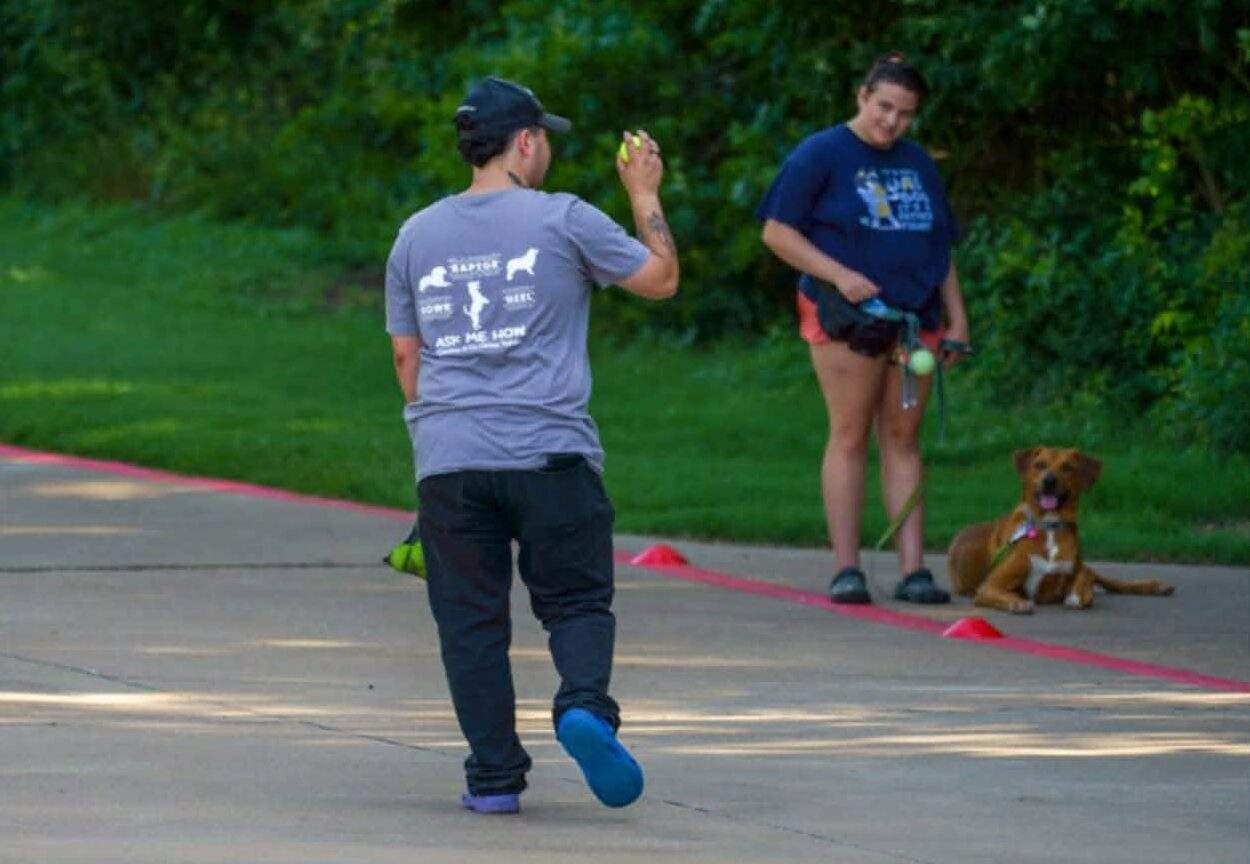
Twenty minutes into that first group lesson, something shifted. Moose started to relax. “Then he started having fun. He was happy.” Chayse hadn't seen him that happy in a long time — he'd been anxious for so long that his own personality had started to feel out of reach. It wasn't just a different location. It was a different kind of lesson: balls, toys, treats, structure — room to succeed instead of being shoved straight toward panic.
“He looks like him again.” For Chayse, that was the proof she needed — Moose was still in there, and the right approach could bring him all the way back.
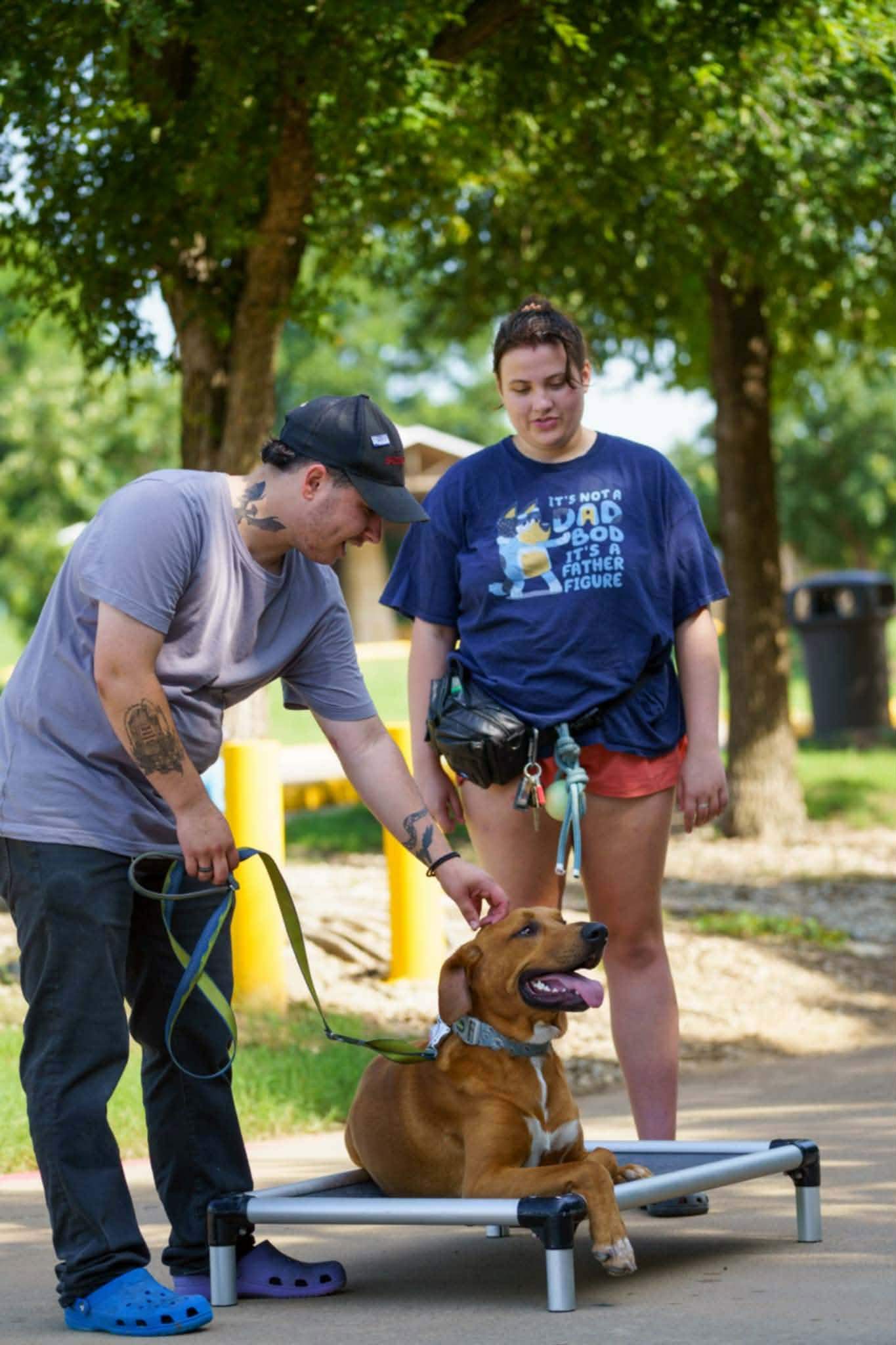
There were balls, toys, and treats... and he started being himself again.
Building a Real Plan
From there, Luke built out a real plan, starting with introducing a prong collar and showing Chayse exactly which one to use and how. For a 100-pound Doberman mix and an owner managing her own joint problems, that tool wasn't optional — it was the difference between training him and being dragged by him.
Used correctly, it gave Chayse a way to communicate clearly and calmly instead of losing every walk to a tug-of-war. Moose started learning that lunging forward didn't get him anywhere, instead he learned “maybe I shouldn't do that.”
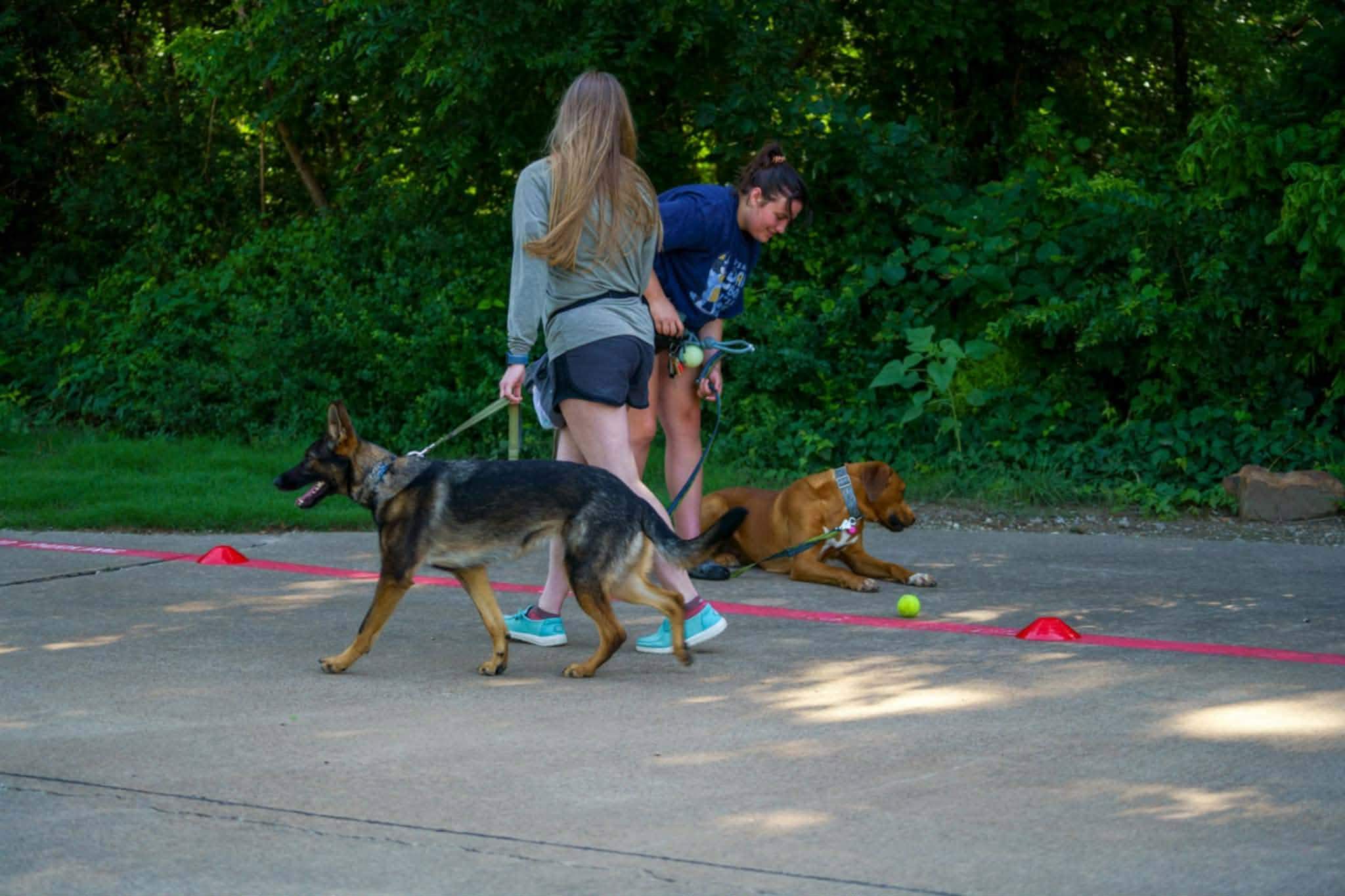
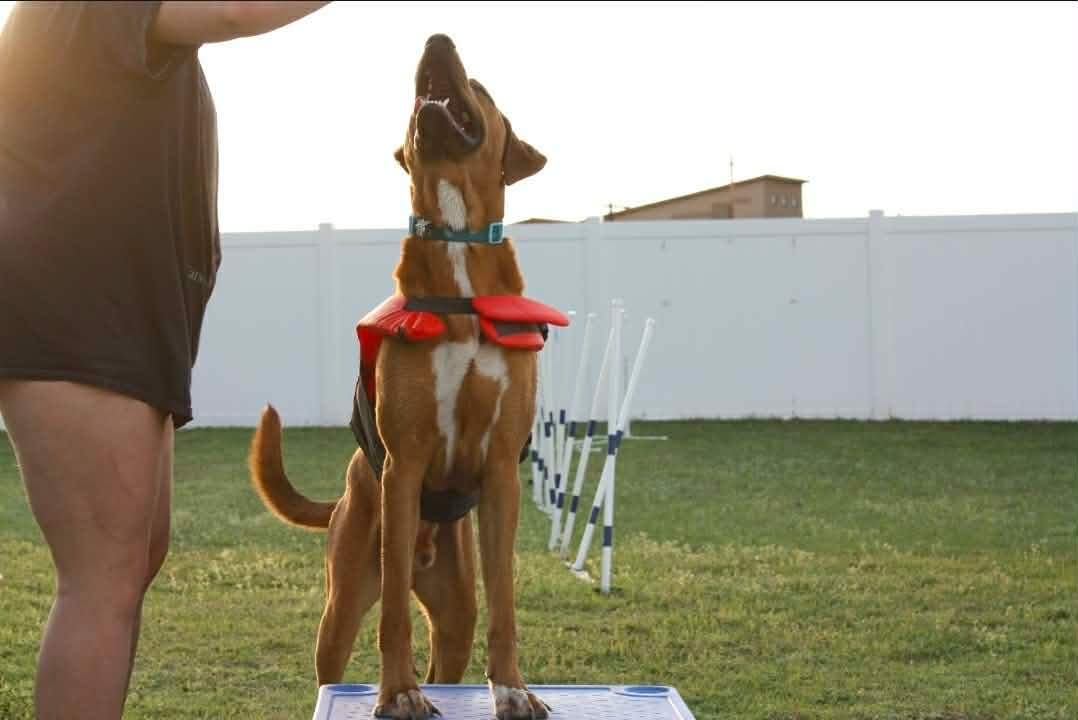
Moose Today
Now, they walk past dogs and dog parks without incident. “He doesn't care anymore.” The change goes beyond leash manners, too. Just last week, a dog walked by their yard, and instead of screaming, Moose ran the fence line trying to play — bowing, jumping, clearly thrilled. "He was excited to see a dog."
For Chayse, that's the real win. A dog who looks like himself again — happier, safer, and steady in a world that used to terrify him.
If Your Dog Is Reactive, You're Not Stuck
Moose's story isn't unique. Lots of dogs struggle with reactivity, not understanding what's a threat and what's just... life.
Reactivity can look like aggression from the outside, but for a lot of dogs, it starts as fear — one bad moment that convinced them the world wasn't safe anymore. With the right plan and training built around the real dog in front of you, that story can turn around.
Cowboy & Co Canine Training helps Dallas-area owners work through reactivity, obedience challenges, service dog preparation, therapy dog preparation, and real-world skills — training that fits the dog you have. Book a free consultation with Luke and find out what your dog needs next.
Discover more from Cowboy & Co Canine Training
Subscribe to get the latest posts sent to your email.