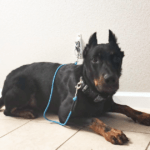

Separation anxiety is one of the most misunderstood problems in dogs. People either dismiss it by thinking their dog's being dramatic or they go the other direction and make it much worse without even realizing it. Let's talk about what's actually going on, how to spot it early, and what you can do about it.
First, a dog that dislikes being alone alone is not the same as one that has anxiety.
I want to clear this up immediately, because the difference matters. My dog Cowboy is not a fan of being in his crate when I leave, but he has no anxiety. He goes in, he settles, and he's fine. That's different from a dog that's screaming, scratching, throwing themself against the crate door, and destroying everything in sight.
One is a preference. The other is a disorder. Know the difference before you decide what you're dealing with.
Separation anxiety signs (some might surprise you)
The obvious ones people know: destruction when you're gone, barking all day, neighbors complaining, scratching up the door. But separation anxiety often shows up before you even leave the house in behaviors many people miss or dismiss as something else.
BEFORE YOU LEAVE
Pacing, whining, or shadowing you the moment you pick up your keys, shoes, or jacket
WHILE YOU'RE GONE
Destruction (especially near doors and windows), non-stop barking, house soiling, escape attempts
IN THE CRATE
Screaming long after all needs are met — potty break, water, food — your dog just cannot settle
ROOM TO ROOM
Losing it when you walk to the bathroom. If your dog panics the second you leave the room, that's a sign too
The biggest tell of all is that it only happens when you're gone. That's what separates separation anxiety from general boredom or under-stimulation. If the behavior disappears when you're home, you have your answer.
Separation anxiety’s true causes
The biggest cause of all may be genetics. Some dogs are just wired this way, and no amount of training will fully fix it — it can only be managed. That's a hard thing to hear, but it's true in some dogs, and I'd rather you know that going in.
After genetics, the second biggest cause is something you might never guess: too much freedom, too soon. Many dog owners think that giving a dog constant access, constant attention, constant companionship is love. And it is — but it also means they never taught that dog how to be okay on their own. That dog has never learned to just exist without you, so the moment you're gone, they don't know what to do with themself.
Sometimes, task-focused work can trigger an existing predisposition to separation anxiety — as in the case of some service dogs. They're taught from puppyhood to focus solely on their handler because that's the job, but in some dogs it becomes unhealthy.
The other separation anxiety cause nobody talks about is what happens when you come back.
The Unpopular Opinion
If you make a big production of leaving and coming home: the long goodbye, the "I'll miss you so much," and an over-the-top reunion, you are telling your dog there is something to worry about.
You're confirming their fear every single time.
The dog hears: "Yes, this is a crisis. Yes, you should panic when I leave. Yes, I barely made it back." It's not the words. It's the energy.
Big dramatic arrivals and departures are one of the most common ways dog owners accidentally reinforce separation anxiety. And the hardest part is that I know it's coming from a place of love, but they're not like people. They don't think the same way we do, and they don't understand language the way we do. The energy we project is what they pick up on.
The Diabetic Alert Dog with Separation Anxiety
I raised a German Shepherd from 8 weeks to 8 months for a client as a diabetic alert dog. Mom was a stable dog with a great temperament, but we don't know about dad. We never had a single issue the whole time she was with me.
Then she went home to her new handler and within a short period she had massive separation anxiety. She screamed in the crate, tried to escape, scratched at it — the works.
We don't know exactly what triggered it, but believe part of it was a major life change, and part of it was likely genetic. The problem intensified after the family moved into a new home where someone else in the house felt bad for the dog and let her out every time she cried.
The worst part was that it only took a few times being let out before they had a dog who knew that crying equaled freedom. We tried everything — restarting structure from scratch and treated her like an 8-week-old puppy again, working with another trainer.
She's on two medications now and is manageable. The dog does great when her owner is home. But the minute mom walks out of the room, she struggles. Trainers call this an "unhealthy attachment to mom (or dad, as the case may be)," but whatever you call it, separation anxiety is a challenge.
I tell that story because I want people to understand that even with good training and the right foundation, separation anxiety can still happen. It doesn't mean you failed, but it also doesn't mean you're out of luck — there are steps you can take to manage and often reduce the symptoms.
How to help your dog understand it's not a crisis
Every case is a little different, but I start each client struggling with separation anxiety with a specific list of actions to take:
Stop making arrivals and departures a big deal
This is the hardest one and the most important. When you leave, skip the long goodbye. Give them a treat or a chew, put them up, walk out. When you come back, open the crate, open the back door. That's it. No big reunion until they've calmed down. This is the absolute starting point, and I've seen huge improvements from this one change alone.
Work the dog before you leave
If you have a date night at 7, come home at 5 and work your dog. Play, train, exercise — not until they're exhausted, but until they're satisfied. That mental and physical stimulation leaves them in a state of "okay, I had my time, I'm good." Put them up, leave. That's gonna be a whole different dog than one who's been cooped up all day with nothing to do.
Give them something to do in the crate
A frozen Kong is your best friend here. Blend up some applesauce, banana, yogurt, strawberries — whatever safe dog-friendly ingredients you like. Cap it with peanut butter so it doesn't fall out, freeze it overnight, hand it over right before you leave. Frozen means it takes longer, and the licking itself creates a calming response in your dog's brain. You're also creating a positive association: you leaving = the best treat they ever got. That's a powerful response to build over time.
Add structure, not freedom
This surprises people every time, but giving a dog more freedom when they have anxiety makes it worse, not better. Dogs thrive on structure and routines, rules, crate time, and working for food and toys actually reduces anxiety. The dog has something to do, something to expect, something to focus on. A dog with no structure and no direction is a dog left alone with their own spiraling thoughts. That's not kind, it's cruel.
Build up alone time gradually and get help in between
Separation anxiety takes longer to work through than almost anything else in dog training. There are trainers I know who won't touch these cases because of how serious they can get. You need to slowly build up the amount of time your dog can handle being alone. While you're working on that, fill in the gaps with a dog walker, a trusted friend, or doggy daycare. You can't go from zero to eight hours overnight. Give the dog a bridge while you build that tolerance up.
Talk to your vet
Severe cases may need medication, and there's no shame in that. Some dogs are just wired in a way that behavioral work alone won't get them where they need to be. Medication isn't giving up and for some dogs, it's what finally opens the door to actually making progress. Work with your trainer and your vet together if it gets to that point.
Separation anxiety isn't a dog being dramatic
It's about a dog that never learned how to be okay in their own skin, sometimes because of genetics, sometimes because of circumstances, and sometimes because we unintentionally trained them. And yes, sometimes you can do everything right and it still happens.
But more often than not, small changes in your routine and energy make a significant difference. Stop the big goodbyes, work your dog before you leave, and add structure instead of more freedom. Give them something to do. Be consistent, be patient, and get professional help when you need it. This takes time — but it's absolutely workable.
I specialize in dog training for family pets and service dogs. Every case of separation anxiety is different. If your dog is showing severe symptoms, working with a trainer one-on-one is always the best first step. Reach out for more information or to set up a free assessment.
Frequently Asked Questions About Separation Anxiety in Dogs
Q: What are the early signs of separation anxiety in dogs?
Most people look for the obvious stuff — chewed furniture, a destroyed door frame, neighbors texting about the barking. But a dog with separation anxiety often shows signs before you leave. Watch for pacing, whining, or your dog gluing itself to you the moment you pick up your keys, put on your shoes, or grab your jacket. That pre-departure panic is one of the clearest signs.
Q: What causes separation anxiety in dogs?
Genetics is a big factor, and often the one people don't want to hear — some dogs are just wired this way, and it doesn't matter how good of an owner you are. After genetics, the second most common cause is too much freedom and constant companionship too soon.
One other cause is how we behave when we leave and come home. Long dramatic goodbyes and over-the-top reunions actually teach the dog that your departure is a crisis.
Q: Does giving my dog more attention help with separation anxiety?
Unfortunately, it often makes things worse. I know that feels backwards, but a dog that's been given constant access, constant attention, and zero time alone has never developed the skill of being okay on their own. Adding more structure — crate time, working for food and toys, clear routines — does more for an anxious dog than more cuddle time.
Q: How do I stop my dog from freaking out when I leave?
Start with the one change that makes the biggest difference fastest: stop making arrivals and departures a big deal. Skip the long goodbye. Give them a treat or a frozen Kong, put them up, and walk out calmly.
When you come back, open the crate, open the door — that's it. No big reunion until they've settled. The second thing is to work your dog before you leave. A dog that's had exercise and mental stimulation before you go is in a completely different headspace than one who's been cooped up all day. These two changes alone can shift things significantly.
Q: What can I give my dog to keep them calm while I'm gone?
A frozen Kong is one of the best tools you have. Blend up something dog-safe — applesauce, banana, plain yogurt, strawberries — cap it with peanut butter so nothing falls out, and freeze it overnight. Give it right as you leave. Frozen takes longer to work through, and the licking itself produces a calming response in the brain. Over time, you're building a positive association: you leaving means the best treat they ever got. That's a powerful thing to create.
Q: Can separation anxiety in dogs be cured?
Depends on the dog. For some, especially those where the root cause is genetics, it can be managed but not fully cured — and I'd rather be honest with you about that upfront than promise something that won't happen. For many dogs, though, consistent work reduces the symptoms to the point where it's no longer a daily problem. You can’t fix separation anxiety in a week, it takes time, patience, structure, gradually building up alone time, and sometimes professional help.
Q: How long does it take to fix separation anxiety in dogs?
Longer than almost anything else in dog training. Some trainers will not take these cases because of how challenging they can be. How long depends on the severity, the dog's history, and how consistent you are. Mild cases with the right changes can show real improvement in a few weeks. Moderate to severe cases can take months of structured work.
Q: Should I crate my dog with separation anxiety?
Yes — but the setup matters. A properly introduced crate gives the dog a defined, safe space. The problem happens when people skip the setup work, or when someone in the house lets the dog out every time it cries.
Q: When should I talk to my vet about my dog's separation anxiety?
If the anxiety is severe — your dog is injuring itself trying to escape, can't settle at all, or behavioral work alone isn't moving the needle — it's time to bring your vet in. Medication isn't giving up on your dog and for some dogs, it makes the behavioral work possible in the first place. Work with your trainer and your vet together if it gets to that point.
Discover more from Cowboy & Co Canine Training
Subscribe to get the latest posts sent to your email.