DFW Summer Warning: Dallas Pavement Will Hit 135°F — Here's How to Walk Your Dog Safely
North Texas summers are brutal — but the sidewalks will burn your dog’s paws. If you’ve lived the DFW area for at least one summer, you know how hot it gets: summer temps of 95ºF+ by late morning from June through September and sometimes October too.
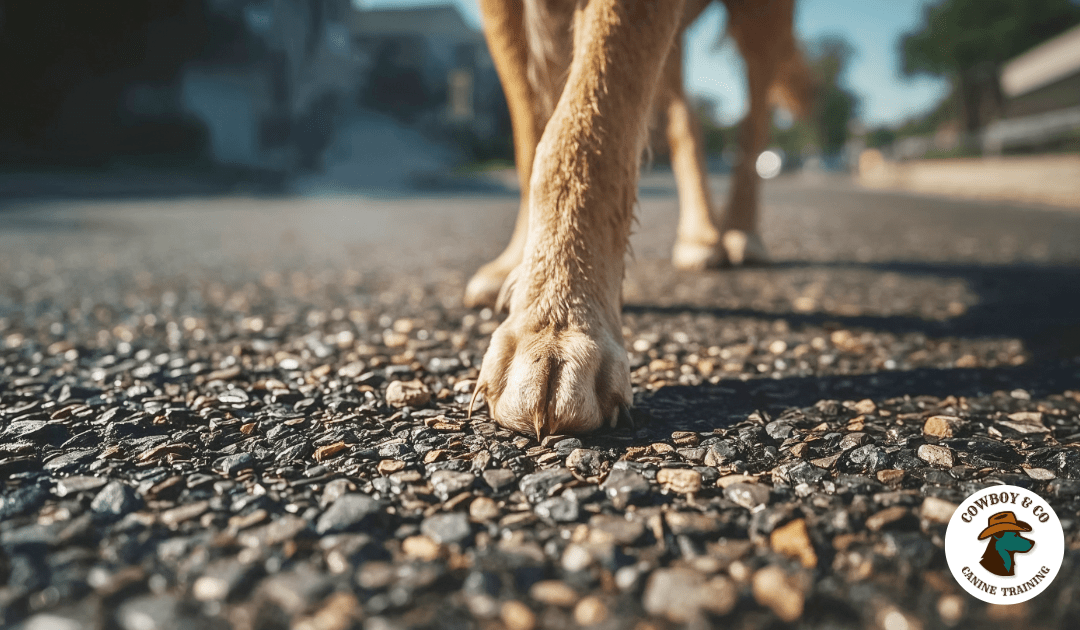
And, before you think, "But my dog's feet are tough," think about it. Would you go barefoot down the street on a hot summer day in Dallas? Tough or not, that pavement gets hot enough to do real damage in under a minute.
How Hot Does Pavement Get in North Texas?
It’s just now June, so we’re still in “pre-heat” mode here in the Dallas area, which means you still have a decent walk window in the mornings and evenings. But soon — maybe even next week — that pavement will be sizzling hot at 9am, even if the air is still mostly comfortable.
Of course, not all surfaces get that hot. So, as long as the air temps and humidity are comfortable, short summer walks in a shaded DFW park or along a trail may be safe, but check first. Just remember that the streets streets and sidewalks are a no-go. They get dangerously hot.
You may have heard that asphalt can reach 135ºF on an 86ºF day. That’s true — but it may be higher or lower, depending on whether it’s getting direct sun or not. But what about the sidewalks — how hot do they get? The short answer is... it depends on the day, but they tend to be cooler than asphalt by a few degrees. To make it easy, I’ve got a handy chart for you, based on actual information from JAMA, Frostburg University, the Journal of Burn Care & Research, and CBS News in Dallas. Feel free to download and share it, I’d also love it if you linked back to my page.
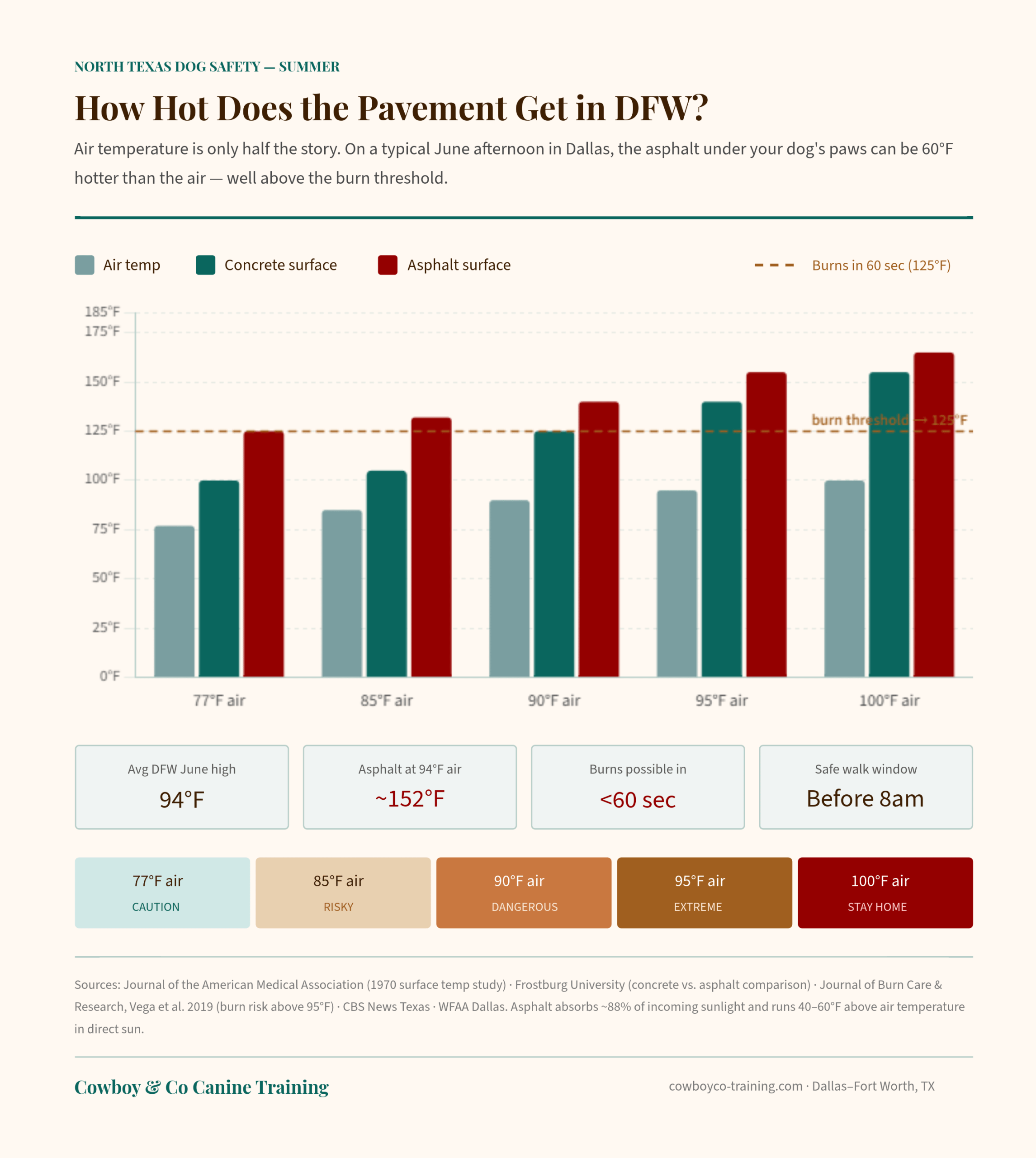
As you can see from the chart, comfortable air temperatures don’t necessarily mean the asphalt or concrete is safe for your dog. Still, the easiest way for you to figure out if it’s too hot is a quick test: place your hand on the ground and hold it for 10 seconds. If you’re comfortable the entire time, your dog’s toe beans should also be comfortable.
Feet work just as well — a friend of mine likes to say that “if I can’t walk barefoot on the sidewalk, neither can my dog.”
Signs Your Dog's Paws Are Burned
If your dog ran around on the back patio in the sun and came in limping, check their paws—they may have burned them. Check for signs of burned paws:
- Limping or reluctance to walk
- Excessive chewing or licking of their feet
- Redness or swelling around their pads
- Blistered or peeling pads
- Discolored pads
Should any of these signs show up, take action! For mild burns without any blistering, dunk their paw into cold water and keep it there for 5-10 minutes. Then, gently clean it and apply a dog-safe burn balm. If it looks really tender, wrap the paw loosely with clean gauze and monitor for healing.
If your pooch has blistered pads or it looks worse than a slight burn, contact your vet or head to the urgent care clinic.
Best Times to Walk During a North Texas Summer
In June, the sun rises over Dallas somewhere around 6:20am - 6:30am — a perfect time to head out for a walk. In fact, the best time to take your dog for a walk during the summer is before 8am and after 8pm. The morning is terrific, because it's early enough that the sun hasn’t had a chance to heat up the sidewalk, but it’s still light enough to see clearly.
While the mornings and evenings are the safest, the most dangerous time for your dog to be out during the summer months is between 10am and 7pm. Just avoid this stretch. Not only can they burn their paws, but dogs release most of their excess body heat through their tongues and paws.
And remember that once the thermometer hits 85℉ and stays there, it’s safter to skip the walk and play in the water instead.
Plan Ahead for Hot Pavement — Find Shaded, Grassy Options
Still, even if you head out out before 8am, you still need to plan your route. Concrete and asphalt take hours to release the heat they absorb during the day. So find shaded routes with sidewalks and grass that don’t get as hot. Also valuable are the many grassy, shaded parks and hiking trails in and around Dallas. I’ve listed a few here, but the AllTrails app has more to explore and plenty of user reviews with photos to help you decide before you go.
- White Rock Lake Park (shaded paths, dog water stations)
- Cedar Ridge Preserve (heavily wooded, cooler surface temps)
- Mountain Creek Lake (grassy, near the water to cool off)
- Oak Grove Park (grassy, near the water)
There are also several dog-friendly restaurants with covered patios, so with some planning and creative Googling you’ll find plenty of dog-friendly and dog-safe options.
Protect Dogs and Their Paws During Summer Heat
While keeping your dogs cool is easiest if you keep them in during the hottest part of the day, sometimes the A/C goes out, or an excursion takes longer than you expect. For moments like that, be sure to have a few things on hand:
- Dog booties for foot protection. You still need to watch for signs your pooch is overheating, but these can keep your dogs toe beans safe. Warning: they take time and training to get your dog comfy in them. Wagwellies are really popular and lightweight.
- Paw wax or balm can offer partial protection and may also be helpful after an outing to soothe the skin. I love Musher's Secret, it's great all year to protect your pup's feet.
- Collapsible water bowls and water — a requirement during every North Texas Summer.
- Cooling vests. Especially helpful for short-snouted breeds like pugs and those with heavy coats, but they can help all dogs.
Bonus Summer Hazards
As if the pavement wasn’t bad enough during a Dallas summer, there are more summer hazards. We have hot cars, blue-green algae in the lakes, and burrs and foxtails in the grass. All of these can send a dog to the ER or worse. Here's what to look out for:


Foxtails
Those seed heads from several types of grasses dry out and start spreading by grabbing onto your clothes or animals as they pass by. But their "grabby" nature becomes a problem when your dog inhales one or it gets stuck between their toes. They look like smaller versions of wheat stalks, but break apart easily and are very light — making it easy for a dog to sniff one up. Foxtails can work their way into all sorts of places: under the skin, between the paws, and even in a dog's sinus cavity — which requires an ER trip to remove.
- Check between paw pads, in and behind ears, and all the nooks and crannies on a dog's body.
- Sneezing or reverse sneezing that doesn't seem to quit.
Blue-green algae
While algae of all types are expected in lakes and ponds, sometimes it can bloom to the point of being toxic like blue-green algae. As long as there's been enough rain and the water has been moving, it's usually okay. However, as summer heats up, you'll want to check with Texas Parks and Wildlife to see if the water bodies you plan to visit have been affected by blue-green algae.
So plan a bit, skip a walk or two, and keep your dog safe — if it’s too hot for your feet or your kids, it’s probably too hot for your dog.
Ready to get some expert eyes on your training?
Book a free consultation to find out how I can help you.
Common Questions About Summer Dog Walk Safety
Q: How hot does the pavement get during summers in Dallas?
Asphalt can reach 135°F on an 86°F day in direct sun — hot enough to burn your dog's paws in seconds. Concrete runs slightly cooler but is still dangerous during peak hours.
Q: What time should I walk my dog during the summer in Texas?
Before 8am or after 8pm. Once the sun is up, pavement heats quickly and stays hot for hours — even after air temperatures drop in the evening.
Q: How do I know if my dog's paws are burned?
Watch for limping, excessive licking or chewing at their feet, redness, swelling, or blistered pads. For mild burns, soak the paw in cold water for 5–10 minutes. Blistering or severe tenderness warrants a vet visit.
Discover more from Cowboy & Co Canine Training
Subscribe to get the latest posts sent to your email.