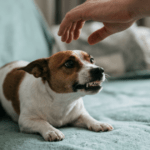
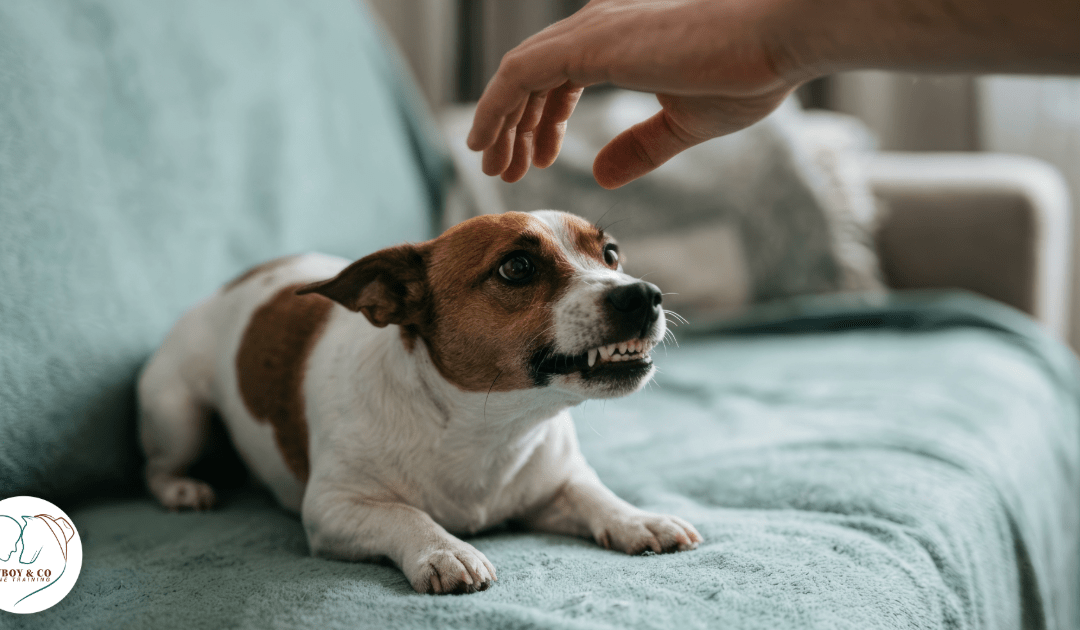
Does your dog bark, growl, or snarl when you come in close to a treasured toy, person, or food? Even if you've never heard the term, you've probably seen it in the chihuahua sitting in their owners lap that snarls at anyone who approaches. Or the puppy who growls when they think someone's taking their food.
What you're seeing is probably resource guarding. If it's allowed to continue, the behavior problem can lead to more aggression and a nasty bite. Let's break it down and understand what it looks like, why it happens, and how to actually fix it.
What IS Resource Guarding?
Dog who resource guard are literally guarding something they consider a finite resource. They use threats to keep people or other dogs away from whatever it is they value, and those threats can be a growl, snap, or even a bite. Whatever that "something" is, is irrelevant because it can be anything or anyone--a favorite person, bed, food bowl, or even trash they pulled from the can.
The bottom line is simple: If your dog values it, it can be guarded.
When resource guarding starts, it can be scary because it can look like your normally sweet pooch has turned on you over a smelly sock you left down. Dogs who resource guard aren't typically being "bossy," "dominant," or "spiteful." I know you may hear trainers or other people out there say things like that and say that you have to show the dog who's the boss.
But it's not true.
Resource guarding is more about uncertainty, insecurity, and anxiety than anything else. If your dog is resource guarding something or you, they're not mean. They're scared. They're terrified that they're going to lose this great thing they've got.
So they protect it from everyone.
This behavior can escalate and cause fights between other pack members or cause them to lash out at you...worse yet, maybe they lash out at a child and hurt them. You've got to know the signs so you can work on stopping the behavior.
Signs of Resource Guarding
Most behavior problems don't start with a bite. They start with warnings—stiff body language and whale eye. Then, as you get closer or it gets worse, they move into a hard stare or a low growl. They curl their lip or start showing teeth...maybe they even start air snapping without making contact. Many dogs also move the item away and place themselves between it and whoever is trying to take it. They'll stand over it and physically protect it from being stolen.
If you're already seeing early signs like stiff body language, eating faster, or whale eye, work on it now. You should be able to stop it before it turns into something serious. Don't wait until they start growling and snapping before you take it seriously, but also understand why they resource guard.
Why Do Dogs Resource Guard in the First Place?
There's rarely just one cause for resource guarding. But in my experience, it typically boils down to one or more of the following:
Learned scarcity. Dogs who came from situations where resources were limited and had to compete or who had food regularly taken away from them learned early that good stuff doesn't stick around. Just because you've given them enough of everything doesn't make that history go away.
Lack of trust in the 'trade.' Look at it this way, if every time you got something awesome and somebody swooped in and snatched it out of your hands, you'd get a little grumpy about the idea too. If your dog gets food or toys and always has them taken away, which is not the same as having to 'earn' time with them, they're going to learn that you can't be trusted.
Genetics and breed tendencies. This isn't an excuse, but it can be a factor. Some dogs, like some people, are more possessive of their things.
Puppyhood and litter competition. When puppies have to compete hard for food or toys with littermates sometimes bring that instinct into their new home.
General Anxiety. Dogs who are anxious in general are often more prone to resource guarding because the underlying insecurity shows up everywhere.
How You Can Fix Resource Guarding with Your Dog
Resource guarding is very trainable, but it's also easy to do the wrong thing and unintentionally make it worse. There's a lot of advice out there that tells owners to just keep taking things away until the dog gets used to it. That is wrong, and a great way to teach your dog that people who approach them are a threat. This can easily escalate a growl into a bite. Please don't do that. Take the time to build the relationship in a positive way.
- Instead of stealing from your dog, practice hand-feeding. It builds (or rebuilds) the connection between having hands near their feet and that being a good thing instead of the opposite. I have many owners hand-feed their dogs for at least part of every meal, either directly or by dropping it into their bowl as long as they're eating calmly. If they get too excited, wait until they calm down before continuing. Building up the trust in the idea that hands near their food is a good goes a long way toward helping ease the fear.
- Once they're more relaxed when hand feed them, build more trust with a trade up system. Instead of just adding food or treats, approach your dog with something even better than they already have. They should be happy to drop what they have in favor of the better thing. Enough practice here and they'll learn that, once again, human hands bring good stuff.
- Desensitize your dog gradually, at a distance that's comfortable for them. Start far enough away that they aren't reacting at all, then slowly close the gap over several sessions or even weeks. This may be the hardest part because people get into a rush. But dogs can only do what they can do, and if they're not ready you might set them back.
- Manage the environment when you train. If you have multiple dogs, kids, or other distractions running around, management isn't optional. Separate feeding areas, pick up toys and high-value items if you can't supervise, and teach kids not approach dogs when they're chewing on a bone or a toy help keep everyone safe while you work on the training.
- Work on impulse control and leave it. When your dog has a sold foundation of obedience and impulse control, they're not as likely to guard because they already have trust built up with you. The more they trust you, the less they feel like they'll have to fight for what's theirs.
When to Get Professional Help with Resource Guarding
If your dog's already bitten someone, skip watching YouTube videos on how to fix resource guarding, and don't make excuses like, 'he's just protective.' Find a professional. Now. Resource guarding often responds well to the right training, but the wrong approach can make it worse and put people and other animals in danger.
Don't play the wait and see game with resource guarding. The moment you notice your dog actively trying to prevent you from taking something from them it's time to start working on it. If your dog's resource guarding and you're not sure what to do about it, book a free consultation. Most of my clients in and around Dallas see results pretty quick, so chances are, I'll be able to help you get your dog back on track.
Ready to get some expert eyes on your training?
Book a free consultation to find out how I can help you.
Discover more from Cowboy & Co Canine Training
Subscribe to get the latest posts sent to your email.