
Everybody has an opinion about dog training tools. Mention a prong collar, e-collar, head halter, slip lead, harness, or even food rewards, and somebody is going to tell you exactly why they think it's good, bad, abusive, gentle, lazy, necessary, wrong, or even abusive.
I wish people understood that the tool is not the training, and every tool can become abusive, even food.
A dog training tool isn't automatically fair or gentle because it looks soft, and it's not automatically unfair or cruel because it looks serious. What matters is how it's introduced, how it fits, how it's conditioned, how the handler uses it, and whether the dog actually understands what is being asked.
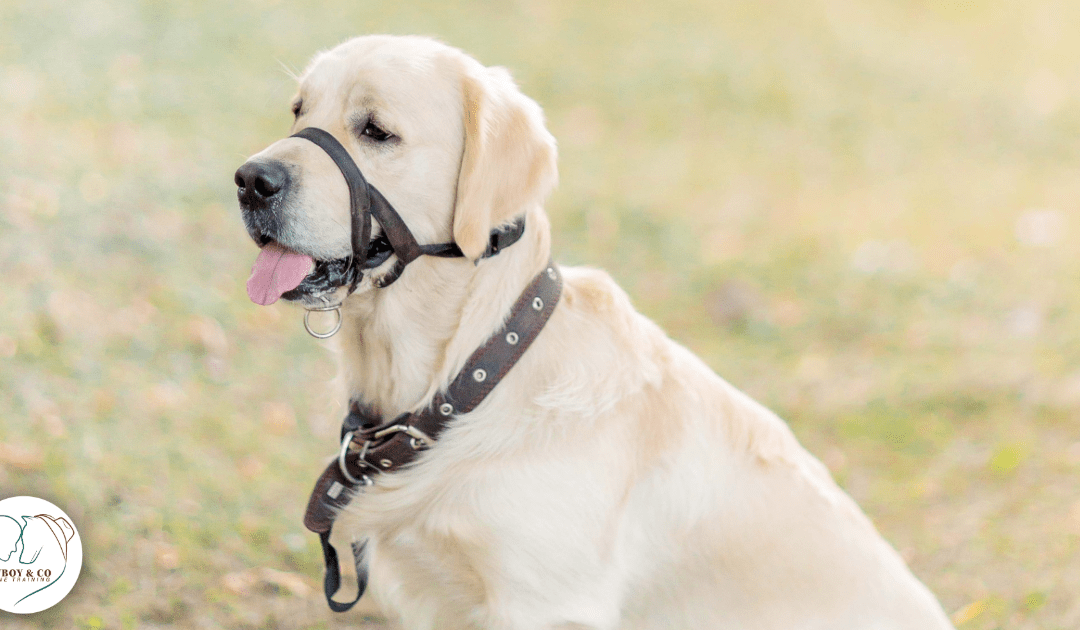
I have seen dogs fight a head halter like a bronc' in a chute while everyone around them insisted it was the “gentle” option. I've also also seen dogs walk calmly and happily on tools that other people judged negatively from across the parking lot.
Those experiences are why I will always care a whole lot more about the dog in front of me than the label some stranger, somewhere, placed on a dog or a training tool.
Tools Create Feedback and Give Your Dog Information
A leash, collar, harness, e-collar, or treat pouch can help create communication. They help make the picture clearer for your dog and can help keep them safe while you teach. You still have to teach by building understanding, rewarding the right choices, and using good timing. If the dog does not understand the behavior, the tool is never a shortcut to force compliance and will only create confusion and sometimes fear.
Leashes and Lines
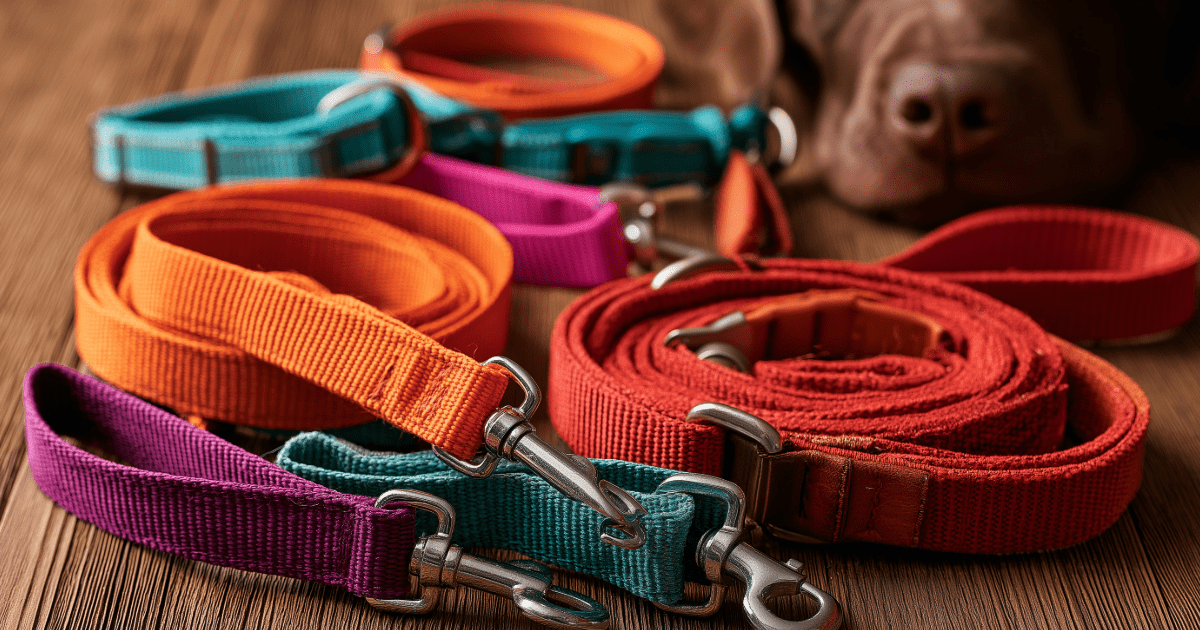
A leash is part of the communication system between you and your dog—it's not just restraint. A jiggle on the leash can tell your dog, 'look at me,' or to move closer, while a quick, sharp tug can be a correction. But the list goes on. Which leash you use changes the conversation a little, but only from a mechanical perspective of how things are done.
- Standard leashes gives you everyday guidance and safety.
- Long lines give your dog more room while you practice recalls, distance work, decompression walks, and work off-leash skills while the lead is still there.
- Slip leads are convenient and common, but tighten with pressure, so they need to be fitted and handled thoughtfully.
The mistake most people make is that using a special, well-marketed collar or lead will fix the problem. It won't. If your dog is dragging you down the sidewalk, lunging at distractions, or hitting the end of the line over and over, the answer is to teach the dog what you want, step by step.
They need to know what leash pressure means, where reinforcement happens, and how to stay connected to the you.
| Pros | Cons |
|---|---|
| Communication link between handler and dog | Dog still needs training |
| Long lines allow safe distance work | Slip leads require proper fit and handling |
| Standard leashes give everyday guidance and safety | Don't solve pulling, lunging, or reactivity on its own |
Flat Collars and Everyday Collars
Flat collars are great for ID tags, light leash work, and dogs that already have reliable leash manners. They are simple, familiar, and useful. But simple does not always mean safe.
A strong dog can still choke, strain, or injure themself on a flat collar if they repeatedly hit the end of the leash. And, a reactive dog can still rehearse bad habits on a flat collar.
So as a trainer, I don’t automatically see a flat collar as harmless. I ask whether it is the right tool for that dog, that handler, and that situation.
| Pros | Cons |
|---|---|
| Good for ID tags and light everyday leash work | Strong dog can injure themself hitting the end of the leash |
| Simple, familiar, and comfortable for dogs with reliable manners | Reactive dogs can practice bad habits while wearing one |
| Standard leashes give everyday guidance and safety | Not automatically the best choice because of its simplicity |
Slip and Limited-Slip Tools
Martingales, slip collars, choke chains, snake chains, and fur savers all live in the same general conversation because they work through tightening and release.
- Martingales tighten to a limited point and can be useful for dogs that can back out of a flat collar or need clearer leash feedback.
- Slip collars or choke chains tighten without the same fixed limit, so fit, timing, and release are critical.
- Snake chains are thinner slip-style chains often seen in show settings. They're thin, small, and don't obstruct the judges' view.
- Fur savers are designed to reduce coat breakage, especially for long-coated dogs or competition contexts.
Each of these tools should be used thoughtfully, with attention to detail. Remember: If the dog never gets a release, they are not learning. Besides, if you're just pulling harder, your not communicating—you're just applying pressure without clarity.
| Slip & Limited Slip Training Tools | Pros | Cons |
|---|---|---|
| Martingales | Limited tightening to a fixed point Good for dogs who back out of flat collars Clearer feedback than flat collars | Requires correct fit Dog must have release from pressure |
| Slips, Choke Chains, Snake Chains, and Fur Savers | Clear feedback when fiited and timed correctly | No tightening limit so fit/timing are critical Easy to misuse with pressure rather than training |
Head Halters
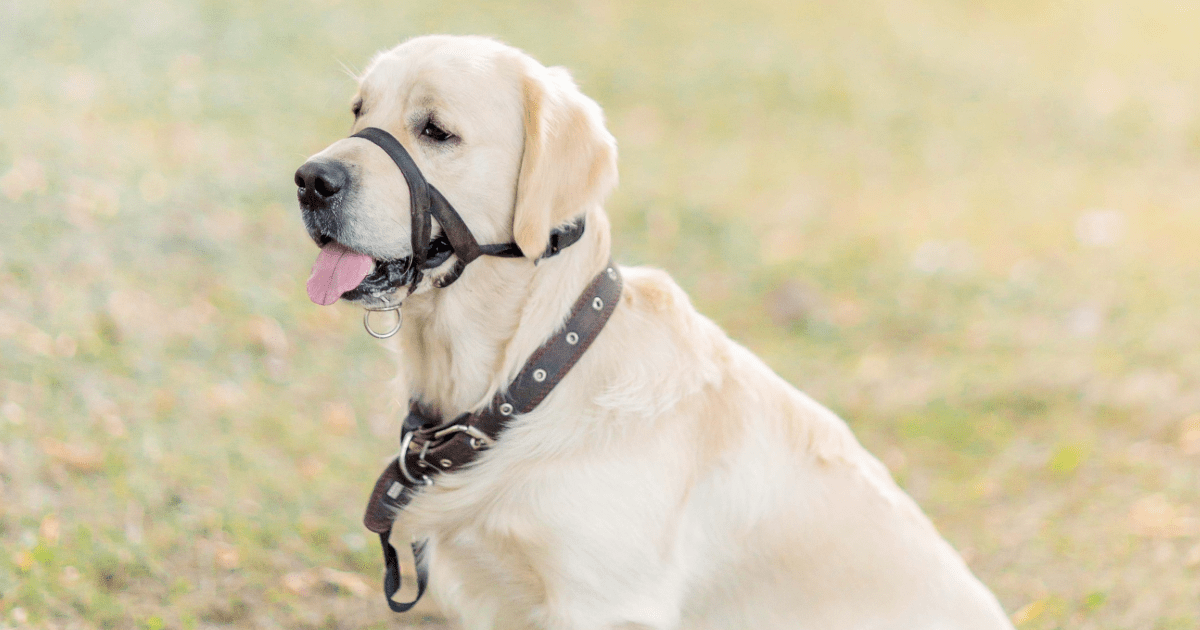
Head halters work by turning the dog's head in the direction of the pressure, just a like a horse's halter leads a horse. They're great when a dog needs help turning away from things they hyperfocus on, or to generally keep their attention on you. However, They should be used with a secondary form of control, like a harness or flat collar, just in case they decide that ball or squirrel simply must be chased.
Many dogs dislike head halters if they are not properly conditioned. They paw at them, fight them, shut down, or spend the whole walk trying to get the thing off their face. In the end, it doesn't matter how careful you are or how good the tool's reputation is, if that dog is having a bad experience, they're having a bad experience.
If you use a head halter, condition your dog properly first. Teach them to put their face into it willingly and pair that with rewards. Avoid sharp corrections or yanking, because the pressure is near the dog’s head and neck. Used thoughtfully, it can help. Used poorly, they create a lot of stress…and sometimes injury.
| Pros | Cons |
|---|---|
| Can help when neck pressure isn't appropriate | Many dogs fight, paw at, or shut down without proper conditioning/training |
| Guides the dog by controlling the head/muzzle area | Sharp corrections or yanking can cause stress or injury near the head/neck |
| Can give very clear direction | Requires careful training/conditioning before actual use |
Prong Collars
A prong collar should be treated as a communication and leverage tool. It is never, ever a punishment device. I often describe it like power steering. It can make guidance clearer and reduce the physical struggle between a strong dog and a handler when it’s been fitted and used correctly.
With prong collars, quality matters more than you’d think. The contact points should be smooth and rounded, not sharp. The collar should fit properly and should not hang low or drag around the dog’s neck.
Some handlers prefer metal prongs, while others use plastic versions depending on the dog and the situation. However, the issues issue is whether the tool is appropriate, adjusted correctly, and used with fair timing—not the material it’s made of.
Do not jerk, yank, swing, or punish the dog with it. The lesson should be simple: hitting the end of the leash creates feedback, staying with the handler creates comfort, clarity, and reward. That is training. The tool is just part of the conversation.
| Pros | Cons |
|---|---|
| Gives clear guidance | MUST be fit correctly with prongs that are rounded and smooth |
| Allows full control with big, strong dogs | Effectiveness depends heavily on timing and correct fit |
E-Collars
E-collars are one of the most emotionally charged tools in dog training, so let’s get one thing clear:
Responsible e-collar training is not about lighting a dog up, scaring them, or using electricity as a shortcut.
Modern e-collars may include tone, vibration, and stimulation settings, and responsible use starts at the lowest level the dog can perceive, not what they can tolerate.
For me, the most common use case is recall and off-leash reliability after the dog already understands and is consistent with recall. E-collars should absolutely not be introduced to a dog that has no idea what “come” means. First, we teach the behavior. Then we layer in the collar so the sensation predicts movement toward the handler, success, and reward.
Think about it this way: if every time you felt a small tingle, you came back and got ten dollars, that tingle wouldn't feel random or scary. It would be meaningful, because you learned what the tingle means and how to turn it off by doing something you already understand.
| Pros | Cons |
|---|---|
| Useful for off-leash reliability once the behavior is understood | Should NEVER be introduced without help of a trainer who understands it |
| Tone, vibration, stimulation settings allow starting at the lowest perceivable settings | Misuse as a shortcut or scare tactic can cause fear and confusion |
Food, Praise, and Play Are Tools Too
Treats are tools. So are praise, play, affection, access to freedom, and the chance to go do something your dog enjoys. Food is not a bribe when you use it correctly—it's information that tells your dog, “That choice paid off. Do that again.”
Food can also calm an excitable, toy-loving dog, helping them focus—where a toy may increase their excitement level (arousal) to a point where they're too excited to think. But the same token, refusing to use food doesn't automatically make training more real, permanent, or better. It can just make training slower, less clear, less motivating, and sometimes more frustrating for the dog.
In the end, you don’t want you to carry treats forever, hoping your dog likes snacks more than squirrels. The goal is to use reinforcement wisely, build understanding, and fade dependence over time.
| Pros | Cons |
|---|---|
| Tells the dog 'that choice paid off, do it again!' | Can become dependent if not weaned off the reward |
| Speeds up learning and builds drive/clarity | Treats or toys need to be readily available during early training |
| Forgiving of mistakes | Can be easy to mis-time rewards and reinforce the wrong thing |
Relationship Over Labels
I am not interested in arguing about buzzwords all day. In the dog training community, you'll hear all sorts of labels to describe training approaches: Pack leader, balanced training, positive training, force-free, correction-based, and I see people get so wrapped up in labels that they forget to look at the dog.
Good training is built on relationship, structure, communication, consistency, consequences, rewards, and trust. Think of it more like parenting than bossing. You can have rules without being unfair. You can have expectations without being emotional or forceful. You can lead your dog without turning every interaction into a fight.
Respect goes both ways. The dog learns boundaries, and the human learns how to communicate clearly. That is where the relationship gets stronger.
How to Choose the Right Tool
Start with the dog in front of you. Look at size, strength, sensitivity, medical needs, coat type, behavior history, and training goals. Start with the least complicated tool that gives the dog and handler clear communication. Then move up or down based on the dog’s response, not based on ego, fear, internet arguments, or ideology.
Ask a few honest questions:
- Does the dog understand the cue?
- Is the tool fitted correctly and has it been conditioned?
- Is the dog calmer and clearer with it, or more stressed and confused?
- Are you using it to communicate, or using it to force?
Those answers matter more than the tool’s reputation.
Common Mistakes
The most common mistake is judging tools by reputation instead of by fit, conditioning, and use...and the dog in front of you. Some dogs respond beautifully to one tool while another is meaningless or worse...terrifies them no matter how carefully you approach it. And before you think I MUST be talking about "shock collars," I'm not. I've seen dogs that absolutely refuse a prong collar but literally smile when that e-collar comes out.
But that brings me to another mistake I see, which is using a tool to force instead of communicate. If the dog does not understand the behavior, corrections will not create clarity. They will just create confusion, fear, and mistrust.
People also create bad associations by putting a new tool on a dog and immediately using it in a hard situation. They refuse rewards because they think treats are cheating. They repeat cues until the cue stops meaning anything. Or they hide tool use from clients instead of explaining the purpose honestly.
None of that is good training. Good training should be honest, fair, and clear.
Final Thoughts
Before you decide if a tool is good or bad, ask yourself if this tool is helping this dog understand what you want in a fair, safe, and consistent way.
➡️ Train the dog in front of you.
➡️ Condition the tool.
➡️ Reward the right choices.
➡️ Be honest about what you are using and why.
And remember that the tool is never the whole program. The relationship, timing, clarity, and follow-through are what turn a dog into the dog you actually want to live with.
Ready to get some expert eyes on your training?
Book a free consultation to find out how I can help you.
Discover more from Cowboy & Co Canine Training
Subscribe to get the latest posts sent to your email.