Your dog sits. They walk nicely on a leash. Most of the time they come when you call, and they even remember to sit when meeting someone new. You've put in the work — and it shows.
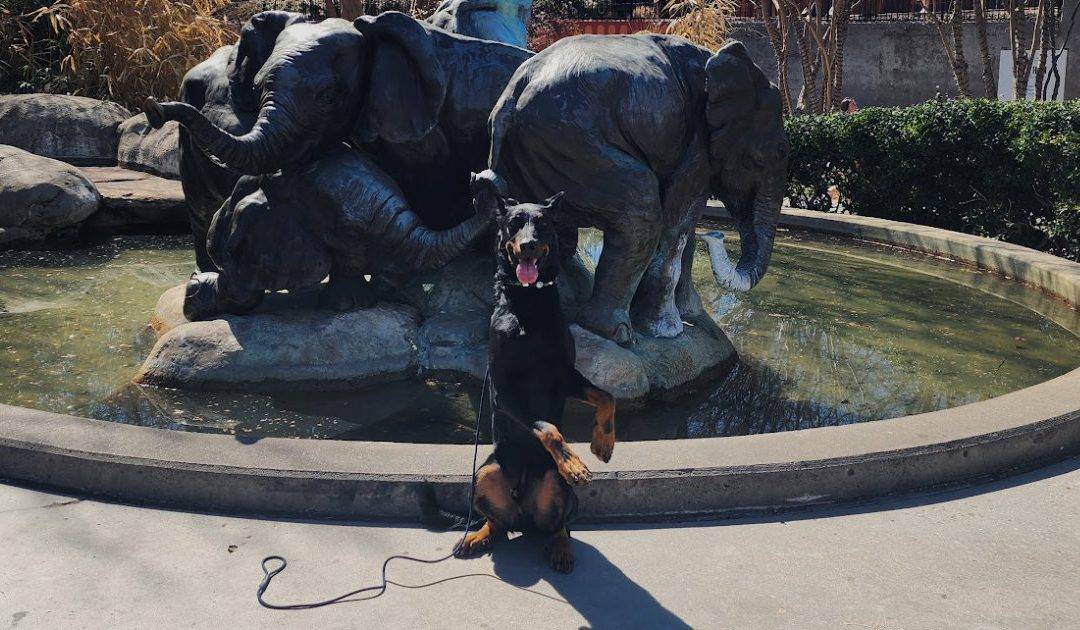
Yet, the problem is that a dog who only ever practices at home is a dog who only knows good behavior at home. The real world is where training becomes a lifestyle. And honestly, that's where the fun really starts, with some dog-friendly locations you can take your pup.
Why Getting Out Matters (It's Not Just About Socialization)
Taking your dog out into the world builds on their foundation in a way that backyard sessions simply can't. New environments, new smells, new sounds, new people — it's all information your dog is learning to process calmly and confidently.
Dogs who get out regularly tend to be more adaptable and more fun to be around. They've seen enough of the world that a shopping cart, a kid on a skateboard, or a stranger in a hat doesn't send them over the edge. That calm, unflappable dog you see trotting happily through a store didn't happen by accident — they've been out there enough that the world stopped being surprising.
It also keeps their training sharp in a way a backyard session never quite can. Asking your dog to heel past a display of squeaky toys is a whole different ask than heeling in your kitchen. And that's the point.
One thing worth saying many, many times: socialization isn't a fix for problem behavior, and it's not just for puppies. It's what you do because your dog has a solid foundation and is ready for more.
Making the Most of an Outing
Before you load up and head out, keep a few things in mind:
Match the environment to where your dog is. A dog who's solid at home but newer to public spaces shouldn't start at a packed Saturday farmers market. Instead, choose a quieter store on a weekday morning or a park during off-peak hours. Build up from there.
Bring treats and stay engaged. This isn't a day off from training — it's training with better scenery. Keep your dog checking in with you, reward the good stuff, and make yourself the most interesting thing out there.
Read your dog. Even well-trained, well-behaved dogs have a limit. Watch their body language and learn the difference between alert-and-curious and starting-to-get-uncomfortable. You don't have to push to the edge every time to make it worthwhile.
End on a win. Leave before they get tired or overstimulated. A shorter outing that ends well does more for your dog than a long one that ends after they've already mentally checked out.
Dog-Friendly Parks & Trails in Richardson & Garland
The Dallas area has a ton of great spots to take a well-behaved dog. Most parks are busiest on weekends, so gauge your dog's readiness and plan accordingly. Here are a few locations to get you started:
Huffhines Park — 300 N Plano Rd, Richardson
Cottonwood Park — 1301 W Belt Line Rd, Richardson
Spring Creek Nature Trail — Spring Creek Trail, Richardson
Prairie Creek Waterfall — 2520 W Prairie Creek Dr, Richardson
Lookout Park — 1600 E Lookout Dr, Richardson
Durham Park — 410 S Weatherred Dr, Richardson
Spring Creek Forest Preserve — 1770 Holford Rd, Garland
Dog-Friendly Retailers
Beyond the obvious pet stores, a handful of retailers in the area welcome dogs inside:
Bass Pro Shops — 5001 Bass Pro Dr, Garland
Scheels — 4450 Destination Dr, The Colony
Lowe's — 501 S. Plano Rd, Richardson
A note on Home Depot: many people assume all locations are dog-friendly — they're not. It's store by store, so call ahead before you go.
Get Out There!
The dog who handles the world well isn't born that way — they're consistently taken out into it by an owner who did the foundational work first. If your dog has that foundation, the best thing you can do now is use it.
If outings still feel more stressful than fun, that's usually a sign there's a little more groundwork to lay — and that's completely okay. That's exactly what we're here for. Reach out and let's talk about where your dog is and what they're ready for — whether that's private lessons, a Board & Train program, or just a quick conversation about next steps.
Leash pulling is probably the number one thing people ask me about. And honestly, it's one of the most fixable problems — once you understand why it's happening in the first place.
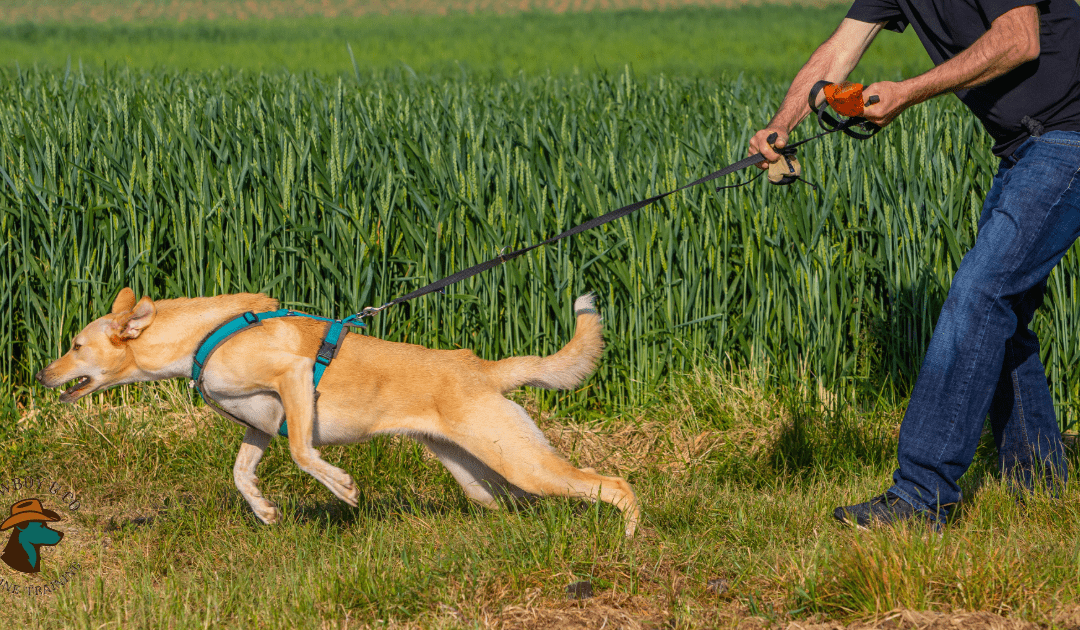
The short version: your dog pulls because pulling works. Every time they lunge toward something interesting and you follow, they learn that pulling is the correct strategy. They're not being dominant. They're not trying to take charge of the walk. They just figured out the most efficient way to get where they want to go.
So the fix isn't about being more forceful. It's about changing the equation.
How People Accidentally Make Leash Pulling Worse
The most common approach I see is constant leash pressure — a kind of low-grade tug-of-war where the owner holds back and the dog leans forward and they both just suffer through it.
The problem is that steady tension actually teaches your dog to pull against steady tension. It becomes background noise. They stop noticing it, and you've got a dog who tows you down the sidewalk without even registering that you're on the other end of the leash.
The other common mistake is letting the walk happen whenever the dog decides it's happening. Your dog hits the end of the leash, you follow, and the whole thing repeats until you're home. From the dog's perspective, the walk ran exactly as planned.
What Does Loose-Leash Walking Look Like?
Before we fix anything, let's get clear on what we're working toward. Loose-leash walking doesn't mean your dog walks in a perfect heel at your left knee the entire time. That's heel work, and it's a different skill.
Loose-leash walking means there's slack in the leash. Your dog can sniff around, check things out, walk at their own pace — as long as the leash isn't tight. It's a reasonable expectation for a normal walk, and it makes the whole experience better for both of you.
How I Teach Dogs to Walk Nicely
I teach loose-leash walking in two phases: building the right association first, then proofing it in the real world.
Teach the Leash to Mean Something
Before we ever worry about the walk, I want the dog to understand one thing: a tight leash is information, not a battle. When the leash gets tight, movement stops. When it goes loose, movement resumes.
Start in a low-distraction area — your backyard, a quiet hallway, wherever your dog can actually think. The moment your dog hits the end of the leash and creates tension, you stop completely. No verbal correction, no yanking back. Just stop.
Wait. The second the dog adjusts and the leash goes slack — even slightly — mark it (a cluck, a 'yes,' whatever you use) and start moving again. That's the whole game at first.
Most dogs figure this out faster than their owners expect. Within a few sessions, you'll see your dog start to self-regulate — they hit the end, they feel the pressure, and they back off before you even have to stop.
Reward What You Want
Once the dog understands that tension stops the walk, we start rewarding them for actively choosing to walk near you. This is where a lot of people skip ahead too fast and wonder why it's not working.
When your dog is walking calmly with slack in the leash, mark it and reward. Not constantly — you're not a treat dispenser — but enough that your dog starts to realize that staying near you is actually the most productive strategy.
Over time, you're building a dog who chooses to walk with you rather than a dog who's simply being prevented from walking ahead of you. That's a completely different dog to walk.
A dog who chooses to walk with you is a completely different animal than a dog who's simply being held back. That's the goal we're working toward.
What About Equipment?
People ask me a lot about harnesses, head halters, no-pull devices. In my experience, equipment is never a solution or substitute for training, it's part of a carefully considered approach that communicates in a way that your dog understands. It's that communication that's often missing when you're struggling at the end of the leash.
Some dogs — especially large, strong dogs with a lot of drive or a serious pulling history — do benefit from additional communication tools during training. Each case is different and I work with the dog in front of me, making adjustments as needed.
When the Problem is Bigger than Leash-Pulling
Sometimes what looks like leash pulling is leash reactivity. This dog isn't just moving forward, but fixating, lunging, and losing their mind over specific triggers. This is a different problem with a different solution, and managing it the same way as regular pulling usually doesn't work.
If your dog is calm on leash in some environments and explosive in others, it's more likely a reactivity issue worth addressing separately—one that I also help owners solve.
How Long Does It Take?
Depends on the dog, the history, and on how consistent you are outside of sessions. A young dog with no strong pulling habits might get this in a week of daily work. A dog who's been dragging their owner for three years is going to take longer — the habit is deep and the reinforcement history is long.
Either way, it's fixable. I've never met a dog that couldn't learn to walk on a loose leash with the right approach and enough patience.
When you went looking for a dog trainer, did you get overwhelmed with all the hype? You're not alone! Finding the right dog trainer is about more than hype, good marketing, or branded training. And, while there are some excellent programs for dog trainers that offer certifications in their particular method, there is no licensing board. No board exam. No minimum hours. No governing body that can pull someone's credentials if they hurt a dog or take someone's money and disappear.
Anybody can call themselves a dog trainer.
If that sounds a little scary, I get it.
On the one hand, it means that truly passionate but broke people can learn a trade that feeds their families without an unaffordable entry fee—most of us learned how to train dogs by starting with our own and falling in love with helping other people train theirs. On the other hand, it does mean that you, as a dog owner, need to know how to figure out the good from the not-so-good or downright bad.
In all honesty, I don't see a lack of a licensing board a bad thing, because bad players exist in every industry—board licensing or not.
There are thousands of massively skilled, ethical trainers out there who commit to professional development, care deeply about the families they serve, and always try to do the right thing. So sometimes the difference between the "right" and the "wrong" dog trainer comes down to simple preference ... and whether you can work together.
But there are also people who watched a few YouTube videos and decided that was good enough, and that teaching dogs is easy. Those are the individuals I'm trying to protect you from, and I hope my advice helps.
Here's how I'd approach it if I were looking for someone to work with my dog.
Start with Their Philosophy
Ask any trainer you're considering to explain their training philosophy. Not their sales pitch—you're looking for their real-world approach. How do they teach a new behavior? What happens when a dog gets it wrong? What tools do they use and why?
You're not necessarily looking for a specific answer. You're looking for someone who can give you a clear, thoughtful one. If a trainer can't explain their methods in plain language, that's a problem: Either they don't fully understand what/why they do what they do, or they're hiding something.
Be a little skeptical of anyone who tells you their method is the only correct one. Dog training has room for nuance—a lot of it. A trainer who dismisses entire schools of thought without being able to explain why usually hasn't engaged with them seriously enough to have a real opinion.
Look for Transparency, Not Just Reviews
Reviews on Google, Yelp, and Facebook matter. A trainer with dozens of five-star reviews over several years is a good sign. But reviews don't tell you everything—they tell you people were happy, not necessarily that the training held up six months later or that the methods were sound.
Look for trainers who are transparent about their process. Do they explain what a first session looks like? Do they talk openly about what they can and can't help with? Do they have video of actual training sessions—not just before-and-after highlight reels?
A trainer who's confident in their work tends to show it. One who's hiding behind vague promises and cinematic marketing videos might not have as much to show.
Ask About Continuing Education
The best trainers I know are still students. They go to seminars. They work under people who know more than they do in certain areas. They study methods they don't personally use, because understanding something doesn't mean you have to agree with it or even use it.
Ask any trainer you're considering: what's the most recent thing you learned? Who do/did you study under? What certifications or continuing education have you pursued?
The specific answer doesn't matter as much as whether they have one. A trainer who stopped learning the day they started training is a trainer who's been running on the same information for years—and the field has moved.
Find a Dog Trainer You Actually Like
This sounds obvious, but it matters more than you might realize. You're going to be working with this person closely. You'll have to take direction from them, ask questions, and trust their judgment about your dog. If something feels off in the first conversation, pay attention to that.
A good trainer is patient with you, not just with your dog, because sometimes the hardest part of dog training is teaching the humans who love them to communicate clearly in a way the dog understands. A great trainer will explain things clearly and won't make you feel stupid for asking basic questions.
They're also honest with you even when the honest answer isn't what you want to hear.
Dog Training Red Flags Worth Taking Seriously
I've seen enough of the industry to know what problems look like before they develop. Walk away if they:
guarantee specific results before meeting your dog—no ethical trainer does this because there are way too many variables.
can't or won't explain their methods in plain language—insecure and inexperienced people throw a bunch of jargon around without clear explanations.
suggest keeping training methods secret from you 'so your dog doesn't catch on'—how exactly are you supposed to maintain your dog's training later on?
are reluctant to let you observe a session or visit a board and train—would this fly in your kids' kindergarten?
shame or frighten you about your dog's behavior to pressure a sale.
dismiss your concerns about methods without actually addressing them.
price is shockingly low — quality training requires real time and skill, and that costs something.
have no plan for what happens if a method isn't working for your specific dog.
Your dog can't advocate for themselves. It's on you to find someone who deserves to work with them.
Questions to Ask Before You Book
Here's a short list I'd run through with any trainer I was considering:
How long have you been training professionally?
What's your training philosophy, and what tools do you use?
Can you describe what a first session with my dog would look like?
What happens if my dog's behavior doesn't respond to your approach?
Do you offer follow-up support after the program ends?
Can I speak with or read reviews from past clients with a similar situation to mine?
A trainer worth hiring will welcome every one of those questions.
One More Thing
I'm obviously going to think I'm a good trainer. So I'm not writing this to tell you to hire me. I'm writing it because I've seen people go through expensive, ineffective, and sometimes harmful training experiences—and most of them could have been avoided with a little more information upfront.
Do your homework. Ask hard questions. And find someone who treats your dog like an individual, not a problem to be fixed.