Everybody has an opinion about dog training tools. Mention a prong collar, e-collar, head halter, slip lead, harness, or even food rewards, and somebody is going to tell you exactly why they think it's good, bad, abusive, gentle, lazy, necessary, wrong, or even abusive.
I wish people understood that the tool is not the training, and every tool can become abusive, even food.
A dog training tool isn't automatically fair or gentle because it looks soft, and it's not automatically unfair or cruel because it looks serious. What matters is how it's introduced, how it fits, how it's conditioned, how the handler uses it, and whether the dog actually understands what is being asked.
I have seen dogs fight a head halter like a bronc' in a chute while everyone around them insisted it was the “gentle” option. I've also also seen dogs walk calmly and happily on tools that other people judged negatively from across the parking lot.
Those experiences are why I will always care a whole lot more about the dog in front of me than the label some stranger, somewhere, placed on a dog or a training tool.
Tools Create Feedback and Give Your Dog Information
A leash, collar, harness, e-collar, or treat pouch can help create communication. They help make the picture clearer for your dog and can help keep them safe while you teach. You still have to teach by building understanding, rewarding the right choices, and using good timing. If the dog does not understand the behavior, the tool is never a shortcut to force compliance and will only create confusion and sometimes fear.
Leashes and Lines
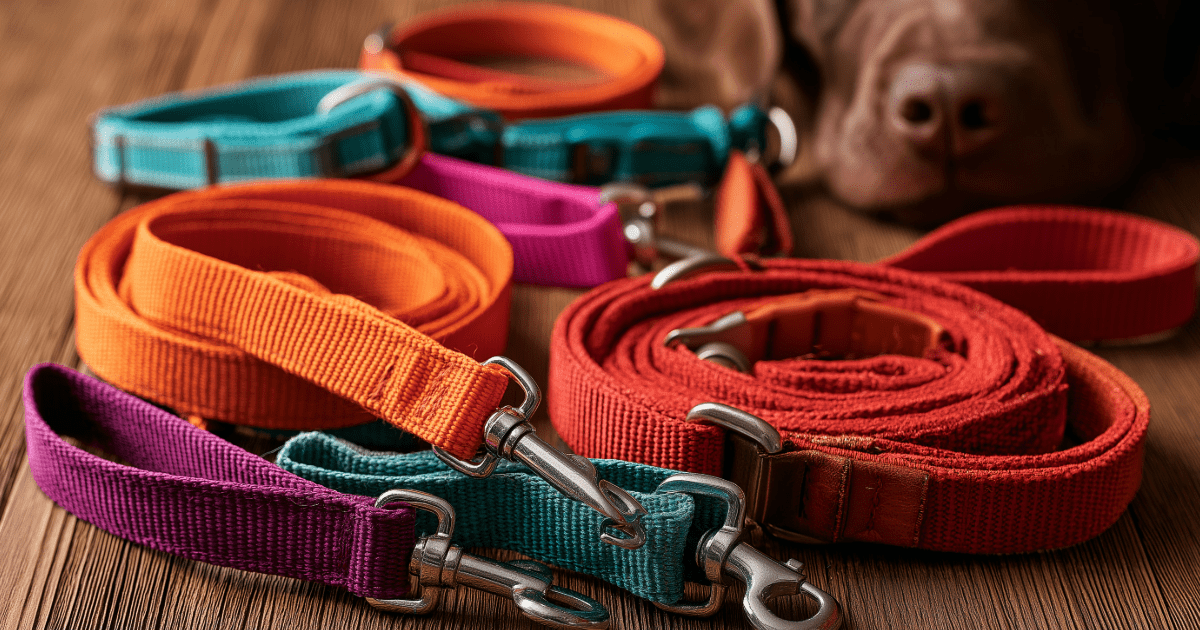
A leash is part of the communication system between you and your dog—it's not just restraint. A jiggle on the leash can tell your dog, 'look at me,' or to move closer, while a quick, sharp tug can be a correction. But the list goes on. Which leash you use changes the conversation a little, but only from a mechanical perspective of how things are done.
Standard leashes gives you everyday guidance and safety.
Long lines give your dog more room while you practice recalls, distance work, decompression walks, and work off-leash skills while the lead is still there.
Slip leads are convenient and common, but tighten with pressure, so they need to be fitted and handled thoughtfully.
The mistake most people make is that using a special, well-marketed collar or lead will fix the problem. It won't. If your dog is dragging you down the sidewalk, lunging at distractions, or hitting the end of the line over and over, the answer is to teach the dog what you want, step by step.
They need to know what leash pressure means, where reinforcement happens, and how to stay connected to the you.
Pros
Cons
Communication link between handler and dog
Dog still needs training
Long lines allow safe distance work
Slip leads require proper fit and handling
Standard leashes give everyday guidance and safety
Don't solve pulling, lunging, or reactivity on its own
Flat Collars and Everyday Collars
Flat collars are great for ID tags, light leash work, and dogs that already have reliable leash manners. They are simple, familiar, and useful. But simple does not always mean safe.
A strong dog can still choke, strain, or injure themself on a flat collar if they repeatedly hit the end of the leash. And, a reactive dog can still rehearse bad habits on a flat collar.
So as a trainer, I don’t automatically see a flat collar as harmless. I ask whether it is the right tool for that dog, that handler, and that situation.
Pros
Cons
Good for ID tags and light everyday leash work
Strong dog can injure themself hitting the end of the leash
Simple, familiar, and comfortable for dogs with reliable manners
Reactive dogs can practice bad habits while wearing one
Standard leashes give everyday guidance and safety
Not automatically the best choice because of its simplicity
Slip and Limited-Slip Tools
Martingales, slip collars, choke chains, snake chains, and fur savers all live in the same general conversation because they work through tightening and release.
Martingales tighten to a limited point and can be useful for dogs that can back out of a flat collar or need clearer leash feedback.
Slip collars or choke chains tighten without the same fixed limit, so fit, timing, and release are critical.
Snake chains are thinner slip-style chains often seen in show settings. They're thin, small, and don't obstruct the judges' view.
Fur savers are designed to reduce coat breakage, especially for long-coated dogs or competition contexts.
Each of these tools should be used thoughtfully, with attention to detail. Remember: If the dog never gets a release, they are not learning. Besides, if you're just pulling harder, your not communicating—you're just applying pressure without clarity.
Slip & Limited Slip Training Tools
Pros
Cons
Martingales
Limited tightening to a fixed point Good for dogs who back out of flat collars Clearer feedback than flat collars
Requires correct fit Dog must have release from pressure
Slips, Choke Chains, Snake Chains, and Fur Savers
Clear feedback when fiited and timed correctly
No tightening limit so fit/timing are critical Easy to misuse with pressure rather than training
Head Halters
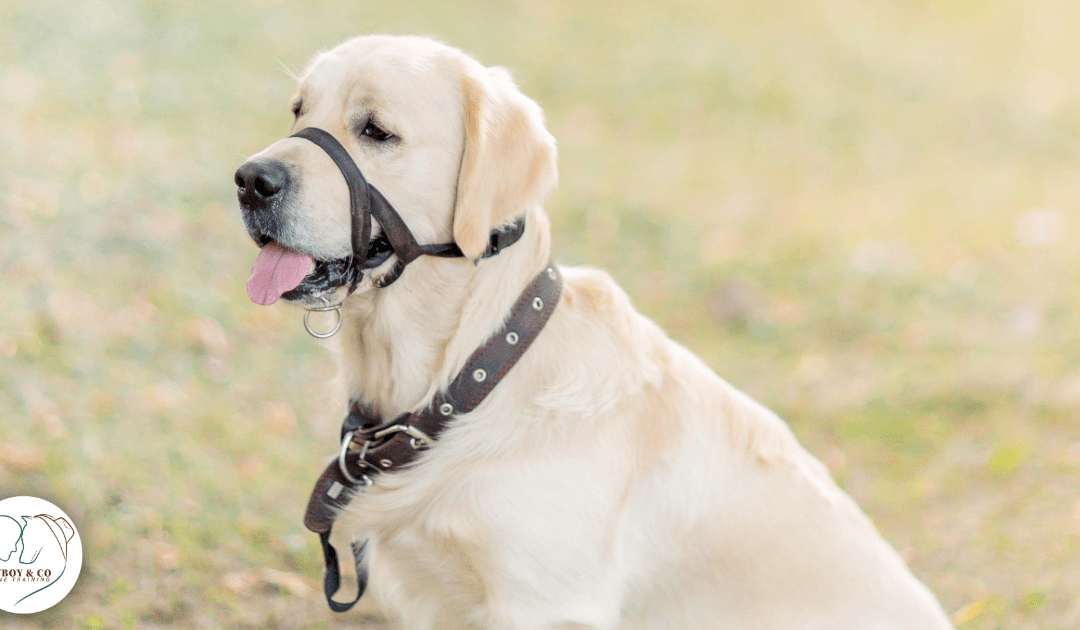
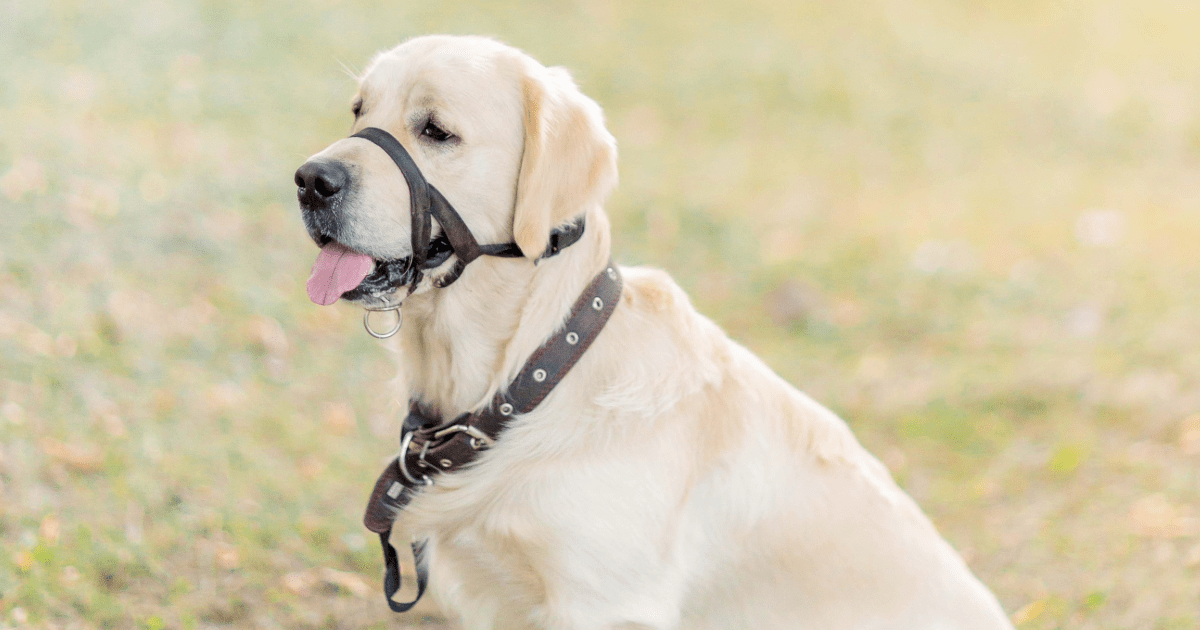
Head halters work by turning the dog's head in the direction of the pressure, just a like a horse's halter leads a horse. They're great when a dog needs help turning away from things they hyperfocus on, or to generally keep their attention on you. However, They should be used with a secondary form of control, like a harness or flat collar, just in case they decide that ball or squirrel simply must be chased.
Many dogs dislike head halters if they are not properly conditioned. They paw at them, fight them, shut down, or spend the whole walk trying to get the thing off their face. In the end, it doesn't matter how careful you are or how good the tool's reputation is, if that dog is having a bad experience, they're having a bad experience.
If you use a head halter, condition your dog properly first. Teach them to put their face into it willingly and pair that with rewards. Avoid sharp corrections or yanking, because the pressure is near the dog’s head and neck. Used thoughtfully, it can help. Used poorly, they create a lot of stress…and sometimes injury.
Pros
Cons
Can help when neck pressure isn't appropriate
Many dogs fight, paw at, or shut down without proper conditioning/training
Guides the dog by controlling the head/muzzle area
Sharp corrections or yanking can cause stress or injury near the head/neck
Can give very clear direction
Requires careful training/conditioning before actual use
Prong Collars
A prong collar should be treated as a communication and leverage tool. It is never, ever a punishment device. I often describe it like power steering. It can make guidance clearer and reduce the physical struggle between a strong dog and a handler when it’s been fitted and used correctly.
With prong collars, quality matters more than you’d think. The contact points should be smooth and rounded, not sharp. The collar should fit properly and should not hang low or drag around the dog’s neck.
Some handlers prefer metal prongs, while others use plastic versions depending on the dog and the situation. However, the issues issue is whether the tool is appropriate, adjusted correctly, and used with fair timing—not the material it’s made of.
Do not jerk, yank, swing, or punish the dog with it. The lesson should be simple: hitting the end of the leash creates feedback, staying with the handler creates comfort, clarity, and reward. That is training. The tool is just part of the conversation.
Pros
Cons
Gives clear guidance
MUST be fit correctly with prongs that are rounded and smooth
Allows full control with big, strong dogs
Effectiveness depends heavily on timing and correct fit
E-Collars
E-collars are one of the most emotionally charged tools in dog training, so let’s get one thing clear:
Responsible e-collar training is not about lighting a dog up, scaring them, or using electricity as a shortcut.
Modern e-collars may include tone, vibration, and stimulation settings, and responsible use starts at the lowest level the dog can perceive, not what they can tolerate.
For me, the most common use case is recall and off-leash reliability after the dog already understands and is consistent with recall. E-collars should absolutely not be introduced to a dog that has no idea what “come” means. First, we teach the behavior. Then we layer in the collar so the sensation predicts movement toward the handler, success, and reward.
Think about it this way: if every time you felt a small tingle, you came back and got ten dollars, that tingle wouldn't feel random or scary. It would be meaningful, because you learned what the tingle means and how to turn it off by doing something you already understand.
Pros
Cons
Useful for off-leash reliability once the behavior is understood
Should NEVER be introduced without help of a trainer who understands it
Tone, vibration, stimulation settings allow starting at the lowest perceivable settings
Misuse as a shortcut or scare tactic can cause fear and confusion
Food, Praise, and Play Are Tools Too
Treats are tools. So are praise, play, affection, access to freedom, and the chance to go do something your dog enjoys. Food is not a bribe when you use it correctly—it's information that tells your dog, “That choice paid off. Do that again.”
Food can also calm an excitable, toy-loving dog, helping them focus—where a toy may increase their excitement level (arousal) to a point where they're too excited to think. But the same token, refusing to use food doesn't automatically make training more real, permanent, or better. It can just make training slower, less clear, less motivating, and sometimes more frustrating for the dog.
In the end, you don’t want you to carry treats forever, hoping your dog likes snacks more than squirrels. The goal is to use reinforcement wisely, build understanding, and fade dependence over time.
Pros
Cons
Tells the dog 'that choice paid off, do it again!'
Can become dependent if not weaned off the reward
Speeds up learning and builds drive/clarity
Treats or toys need to be readily available during early training
Forgiving of mistakes
Can be easy to mis-time rewards and reinforce the wrong thing
Relationship Over Labels
I am not interested in arguing about buzzwords all day. In the dog training community, you'll hear all sorts of labels to describe training approaches: Pack leader, balanced training, positive training, force-free, correction-based, and I see people get so wrapped up in labels that they forget to look at the dog.
Good training is built on relationship, structure, communication, consistency, consequences, rewards, and trust. Think of it more like parenting than bossing. You can have rules without being unfair. You can have expectations without being emotional or forceful. You can lead your dog without turning every interaction into a fight.
Respect goes both ways. The dog learns boundaries, and the human learns how to communicate clearly. That is where the relationship gets stronger.
How to Choose the Right Tool
Start with the dog in front of you. Look at size, strength, sensitivity, medical needs, coat type, behavior history, and training goals. Start with the least complicated tool that gives the dog and handler clear communication. Then move up or down based on the dog’s response, not based on ego, fear, internet arguments, or ideology.
Ask a few honest questions:
Does the dog understand the cue?
Is the tool fitted correctly and has it been conditioned?
Is the dog calmer and clearer with it, or more stressed and confused?
Are you using it to communicate, or using it to force?
Those answers matter more than the tool’s reputation.
Common Mistakes
The most common mistake is judging tools by reputation instead of by fit, conditioning, and use...and the dog in front of you. Some dogs respond beautifully to one tool while another is meaningless or worse...terrifies them no matter how carefully you approach it. And before you think I MUST be talking about "shock collars," I'm not. I've seen dogs that absolutely refuse a prong collar but literally smile when that e-collar comes out.
But that brings me to another mistake I see, which is using a tool to force instead of communicate. If the dog does not understand the behavior, corrections will not create clarity. They will just create confusion, fear, and mistrust.
People also create bad associations by putting a new tool on a dog and immediately using it in a hard situation. They refuse rewards because they think treats are cheating. They repeat cues until the cue stops meaning anything. Or they hide tool use from clients instead of explaining the purpose honestly.
None of that is good training. Good training should be honest, fair, and clear.
Final Thoughts
Before you decide if a tool is good or bad, ask yourself if this tool is helping this dog understand what you want in a fair, safe, and consistent way.
➡️ Train the dog in front of you.
➡️ Condition the tool.
➡️ Reward the right choices.
➡️ Be honest about what you are using and why.
And remember that the tool is never the whole program. The relationship, timing, clarity, and follow-through are what turn a dog into the dog you actually want to live with.
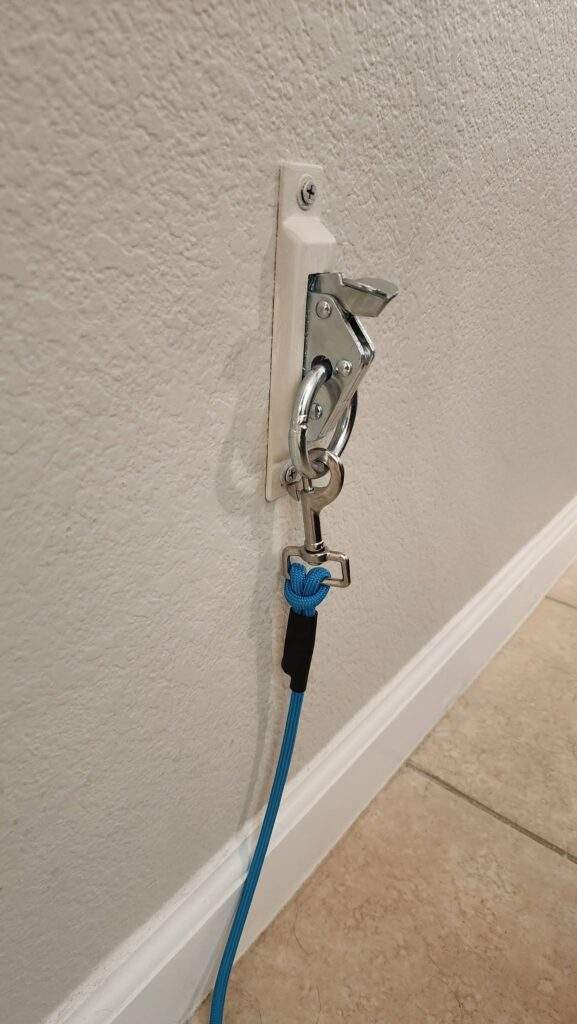
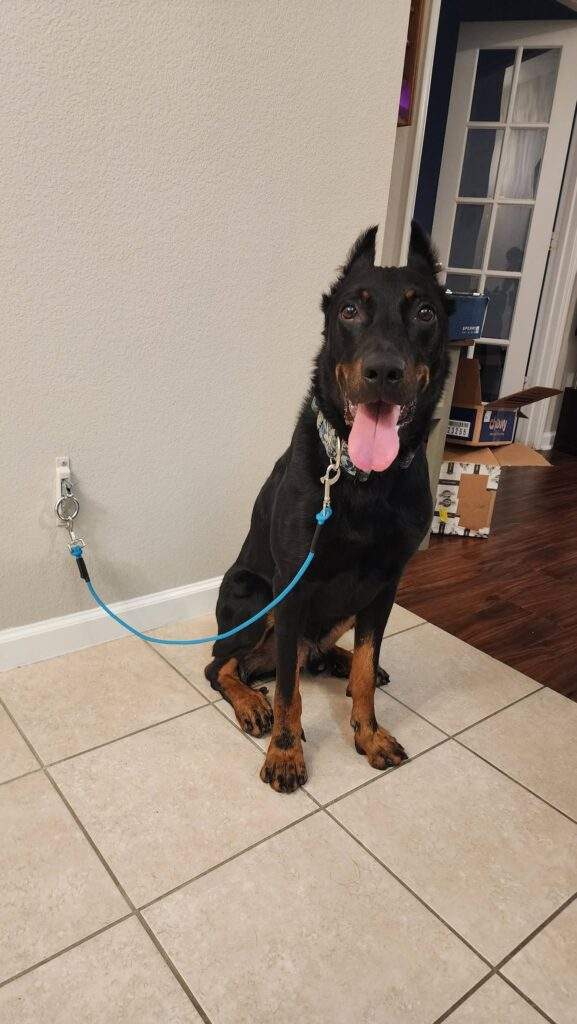
A recent Facebook post about a wall-mounted tether system went way further than I expected — and I mean it blew up. Some people loved it, some had questions, and a few jumped straight to worst-case scenarios. So let's back up and talk about tethering: what it is, what it isn't, and how it can make a real difference to a dog.
Tethering is for Training
Let’s hit the big concern first: tethering doesn’t replace a crate and you can’t tether your dog and leave them. A tethered dog is never alone. I'm either in the room working with them, or at a small distance keeping an eye on things. The point of tethering is training. It teaches them to settle, to stay close, and to be part of what's happening without getting underfoot or getting into trouble. The important thing there is that you never leave a dog alone after you tether them.
The same goes for safety and security. Before I bring another dog into the room while I have one tethered — say, tethering one dog while I actively work with another — I've checked that the anchor point is solid. I’ll never skip that step because I’m in a hurry. This setup makes it possible to safely work with a reactive dog: the other dog stays tethered and settled while I'm giving my full attention to training. Remember, I am the only trainer at Cowboy & Co, so sometimes I need an extra pair of hands. Tethering offers that.
Stationary Tethering
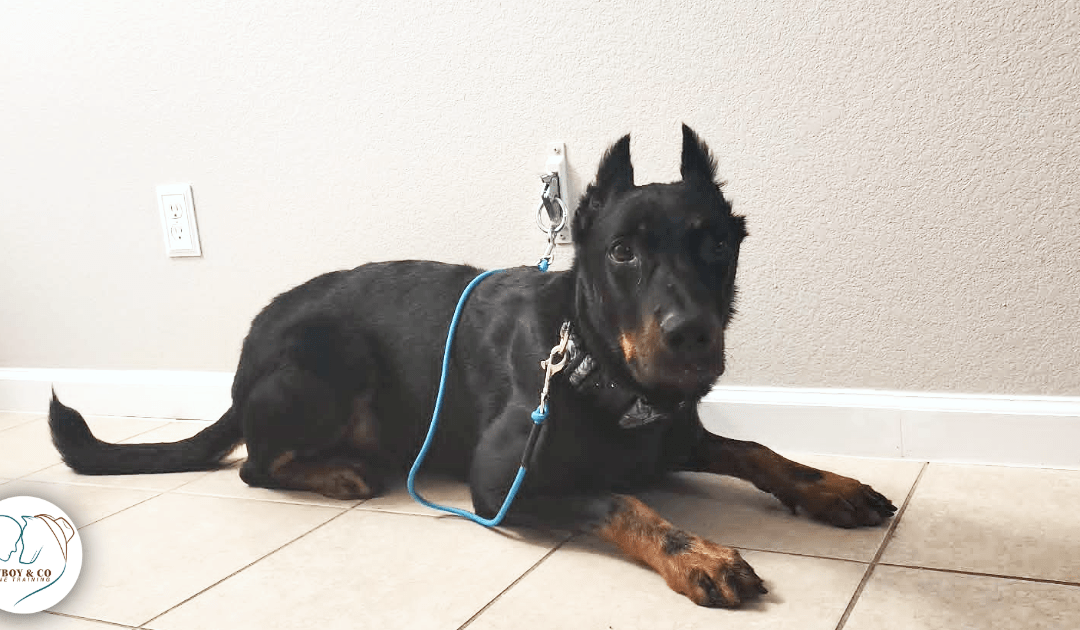
In stationary tethering, the dog is anchored to a fixed spot — a wall, a table leg, a door — while I'm awake and present in that space. The dog learns to settle near me without needing my direct attention, and just as important, it keeps them safe while they're awake and I've got my hands full. Some people use this in a way you may not expect: they keep something like this right outside a door, so they can hook the dog up for a minute while they run in and grab their keys or bring in groceries. It gives them a safe place to leave their dog while they do something else quickly.
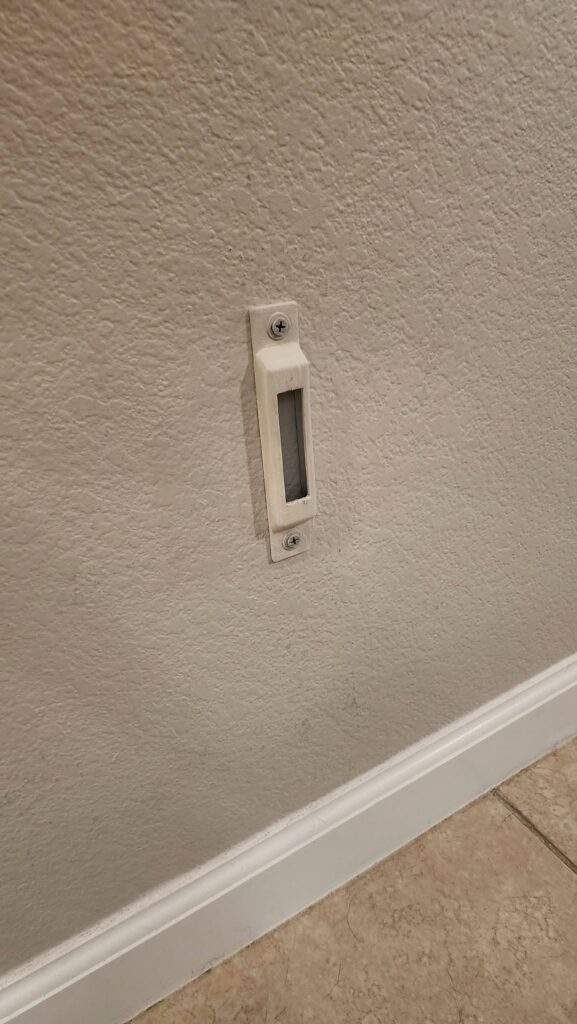
There’s more than one way to set up a tether! While the hardware I used is one option, there are many more available. Eye bolts are the classic version — solid, but they stick out, and I've caught a leg on one more than once. D-rings that fold down when they're not in use solve some of that, though they still stand out visually. The e-track setup I posted about is the one I landed on for my own walls, mainly because it's low-profile, extremely sturdy, and paints to match.
But you don't need to drill a single hole to do this. I've used a 10-pound weight — the kind made for canopies and tents — and just tied a leash around it. If I need more resistance for a bigger or stronger dog, I'll stack a couple. I've tethered to a table leg, a couch, a door. All of it works, as long as it's heavy enough or secure enough that the dog can't drag it around. That matters most for anyone renting, or anyone who doesn't want holes in a wall.
Tethering to a person — sometimes called the umbilical method — is a different tool with a different job. The dog is clipped to me, usually at my belt, and goes wherever I go for a stretch of time. This is especially useful for puppies. They learn to stay oriented to me instead of wandering off and getting into trouble.
This payoff is quick. House training gets easier because I catch the signals before an accident happens. A puppy learns that being close to me doesn't mean I’m going to entertain them and that impulse control lesson is vital. And for a puppy still figuring out what's furniture and what's a chew toy, staying attached to me for a chunk of the day means fewer opportunities to make a mistake I’ll have to fix later.
The Benefits of Tethering (No Matter Which Method)
Whether you tether your dog to a wall or to you, the two aren't mutually exclusive. Plenty of dogs have never, ever been tethered with either method. However, the two methods support similar outcomes, such as impulse control and self-soothing. You can also:
Tether a puppy (or dog) while you leave the front door open to go to and from the car
Show dogs they don't have to maul every visitor
Begin to teach the "place" cue easily
"I'm not a professional, but with Johnny I used a regular leash and kept it and him with me all the time for about the first month after I adopted him. Now, if he's having trouble settling down at home I can just clip the leash to his collar and he will settle and lay down. It doesn't need to be clipped to anything, it's just the leash itself is the cue."
— Kenzie
A Few Things to Always Check
Regardless of how I’m tethering, a few things are non-negotiable. I don't use a slip lead where a dog can choke themselves by continuing to pull. But I’m also watching for signs of stress, if a dog is fighting the tether and cannot settle, they’re probably losing the lesson.
Also important: The tether line should only be long enough to let your dog stand up, turn around, and lie down again. Any longer and you risk your dog running to the end and actually breaking the hardware away from the wall.
Sometimes, I'll use a 6-foot leash as a tether, but it really depends on the circumstances and whether I feel like it's what the dog needs and is safe.
I'm Not the Only One Who Tethers Dogs
What surprised me most about the response to that post was how many other trainers and dog owners had already been doing some version of this on their own, often for years, with setups I'd never have thought of. One person's been using a wood block wrapped in sheep's wool with a coated tie-out wire run under a closed door. Someone else uses a ceiling mount attached to a wall stud with a swing hook. A few people are using heavy-duty suction cups so they can move the anchor point around as needed. One woman told me she'd been tethering in her own home for ten years and always figured she was one of the only ones doing it — until she saw how many people showed up in the comments doing the exact same thing.
That's the part worth thinking about. This isn't some fringe idea I invented. It's a tool a lot of experienced dog people already use because it works. If it's new to you, that's fine — welcome to the conversation.
Because I work with service dogs, this question comes up almost daily. Someone falls in love with a puppy at the shelter, or they already have a dog at home, and they want to know if this dog be their service dog? And I understand it — I do. But wanting it to be true and it being true are two very different things. Being honest with you upfront will save you a lot of heartbreak down the road.
Any dog can be trained. Not every dog can be a service dog.
This isn't what you wanted to hear. But the simple truth is that most dogs were not born with the personality traits that make a service dog. You can train behaviors into almost any dog, but you cannot train the right temperament into a dog that doesn't have it. Those are two completely separate things and people get into trouble when they confuse them.
A service dog is way more than a well-trained dog. Services dogs must work reliably, day after day, in every environment imaginable. Crowded grocery stores, hospital waiting rooms, loud events, airports, elevators.
They have to stay focused on their handler when:
A child runs up screaming
A cart crashes nearby
Another dog walks by them
Services dogs have to come right back to work without missing a beat, even when they're getting bumped, jostled, or stepped on. The basic traits that make a service dog have nothing to do with training: the things that make up their temperament cannot be taught.
50%
Industry average washout rate, even in purpose-bred programs
1 in 100
Estimated dogs truly suitable for service work
2 years
Typical time investment to fully train a service dog
Those numbers are pretty standard across the board, it's the baseline before you add in shelter history, unknown genetics, or a dog someone picked because they were cute. It's a lot to absorb, but you need to know it going in.
What you're looking for
I raised Cowboy from the moment he came home at 8 weeks, but before I ever started task training, I spent months watching him. How does he react when something surprises him? Does he recover quickly or does he shut down? Does he want to work with me, or does he want to work on his own terms? You're looking for a very specific kind of dog, and the signs show up early.
Here's what you'll see in a service dog prospect:
Confidence without aggression
Confident dogs investigate new sounds, surfaces, and people. They don't freeze, hide, or bark and that's the dog you want. Fearful dogs don't make service dogs because you're always going to fight against their nature.
Recovery speed
Stuff happens in public and your service dog will get started. But how fast do they come back? That's what you need to know, because a good prospect bounces back almost immediately. Dogs that stay rattled, keeps scanning, and can't settle is telling you something important about their nervous system.
Handler focus
This is a big one, and even purpose-bred pups sometimes struggle. Dogs that are too independent and work with you on their terms aren't good prospects. A great service dog prospect wants to work with you. They'll check in regularly, seeking that interaction. These dogs find value in that partnership and it's what makes the training work.
Sound stability
Loud noises are part of life in public. Services dogs have to be able to hear cars backfire, crowd noise, or fire alarms — and keep working. If a dog is sound-sensitive, that's a big problem for service work that can't usually be conditioned away.
Touch tolerance
In public, strangers are going to reach out. Kids are going to pet without asking. The dog gets bumped in tight spaces. A service dog prospect has to accept handling from anyone without tension, stiffening, or pulling away. Low touch sensitivity is non-negotiable.
Food and toy drive — but controlled
You need a dog that's motivated enough to work but not so over-the-top that they can't focus. Too little drive and you have nothing to work with; too much and the dog can become a liability in public. You're looking for that sweet spot in the middle.
The shelter dog question
I'm not going to tell you it's impossible. Unicorn dogs exist and I've seen shelter dogs become exceptional service animals. But I'll also tell you this: people celebrate those stories loudly, and they stay very quiet about the failures. Because for every shelter dog that made it into service work, there are many more that didn't — and those handlers lost months or years of time, thousands of dollars in training, and in many cases, a real working relationship they desperately needed.
The problem with shelter dogs as service prospects is that you don't know the genetics. You don't know what happened before that dog came through the door. You don't even know if the temperament you're seeing is the real dog or a dog that's shut down because of the stress. Shelter environments are hard on dogs. A dog that seems calm in a kennel might be a completely different animal once it decompresses in a home. That can go either direction — better or much worse.
My honest take
If you have a disability and you need a reliable service dog, a shelter dog is a gamble. It's not that it can never work — it's that you may not be in a position to absorb the emotional or financial cost of failure. If you're plan to go that route anyway, at minimum have a professional trainer evaluate that specific dog before you commit.
And go in with eyes open: even if the dog passes an initial evaluation, temperament issues can emerge months later as the dog matures. There are no guarantees with any dog.
What to look for in a breeder — and why it matters
If you're going through a breeder, the genetics conversation is even more important. A dog from a backyard breeder might technically be the right breed on paper and still have none of the working traits that the breed is known for. Breeders who focus on looks or great pets may have decades of breeding away from the traits that make a working dog. You need a breeder who produces dogs that work, whether it's obedience work, sport, therapy, or ideally, service work.
Look at the parents. Meet them if you can. Are they stable? Do they recover quickly from surprises? Are they interested in people and engaged with the world? The temperament of the parents is the best predictor you have of what you're going to get. Genetics load the gun. Environment pulls the trigger — but if the genetics aren't there, no amount of training will magically create what's missing.
GREEN FLAGS
Investigates new things calmly
Recovers quickly from surprises
Checks in with handler naturally
Stable around sounds and crowds
Accepts handling from strangers
Known, stable parent temperaments
RED FLAGS
Freezes or hides when uncertain
Slow to recover from startles
Easily distracted, ignores handler
Reactive to sounds or movement
Tenses up or pulls away from touch
Unknown history or genetics
The hardest part of this conversation
Sometimes the dog you already love — the one sleeping on your couch right now — is just not the right dog for this work. That doesn't make them a bad dog and it doesn't mean you failed them. It means they're not suited for a job that only a rare few dogs are built for. And the kindest thing you can do for a dog that doesn't have service dog temperament is not put them in that role.
Dogs that are stressed in public, overwhelmed, or unable to decompress is not a happy working dog. That's a dog struggling. The goal of a service dog partnership isn't just functionality for the handler. It's a dog that thrives while doing the work. When it's the right match, you'll know it! The dog is calm, confident, clearly in its element.
If you're trying to figure out whether your dog has what it takes, or you're looking for help selecting the right prospect from the start — that's exactly the kind of conversation worth having with a trainer before you invest years of your life in the process.
I specialize in dog training for family pets and service dogs. Every case of separation anxiety is different. If your dog is showing severe symptoms, working with a trainer one-on-one is always the best first step. Reach out for more information or to set up a free assessment.
FAQs: Service Dog Selection
Can I train my current pet dog to be a service dog? Possibly, but it depends far less on training than most people expect. Training can teach behaviors, but it can't instill the temperament a service dog needs — things like confidence, sound stability, and the drive to work closely with a handler. Before investing time and money in training, have a professional evaluate your dog to see if their natural temperament is a realistic fit for the role.
What's the most important trait to look for in a service dog candidate? Recovery speed is one of the biggest indicators. Any dog will get startled in public — what separates a strong prospect is how fast they shake it off and refocus. A dog that stays rattled, keeps scanning the environment, or can't settle after a surprise is showing you their nervous system that may not be resilient enough for the demands of service work.
Are shelter dogs a realistic option for service work? It's not impossible, but it's pretty rare and there's a bigger chance of losing valuable time and money in training a dog that's not a good candidate. The core challenge is that you simply don't know a shelter dog's genetic background or life history, plus the stress of a shelter environment can mask their true temperament. A dog that seems calm in a kennel may behave very differently once settled into a home — in either direction. If you pursue this route, a professional evaluation before committing is essential.
Why does it matter where a dog is bred if I plan to train it myself? Because genetics determine the ceiling. A breeder focused on appearance or companionship traits may have spent generations selecting away from the working drives and stability that service dogs require. Before choosing a puppy, meet the parents if possible — their temperament is the strongest predictor of what you'll be working with down the line.
Everybody wants to jump straight to obedience — sit, stay, heel. But puppy training has a timeline that, if you follow, will make all the difference.
But just quickly, before you bring that puppy home, make sure they're at least 8 weeks old, unless it's an emergency situation. If you're getting a puppy and the person you're getting it from wants you to take it home before 8 weeks, go somewhere else. Puppies learn a ton from their siblings and mothers during that 6-8 week window, and it's things we humans cannot teach.
The big picture: age-appropriate expectations
Every dog is different, but developmental science gives us a solid roadmap. The biggest mistake people make is expecting too much too soon — or waiting too long and missing the window. From the moment that puppy comes home, they're learning, whether you're teaching them or not.
8-12 Weeks
Name, trust & the basics of home
This is about building the relationship and getting the foundation right. Name recognition, crate introduction, potty routines. Keep sessions to 3–5 minutes — that's all they've got. The goal is just: the world is a good place and home is safe.
8 - 16 Weeks
Socialization window — don't miss it
This is a "now or never" period. Expose them to anything and everything — sounds, surfaces, people of all shapes, sizes, and colors, car rides, other calm dogs. Puppies are students of life right now, and what they learn (or don't) sticks.
Note: Until they've had all their shots, carry your puppy. You can use a stroller or a carrier, but protect them from illnesses that can be fatal. Do not let them touch the ground outside your home and do not let people or other dogs touch them, they just need to see them.
3 – 5 Months
Potty training solidifies, physical conditioning can start
Routines should be clicking by now. Physical fitness work can begin gently with short, low-impact movement only. No forced repetitive exercise on growing joints. This is also when you'll likely hit the first growth spurt... and things might go sideways on potty training for a bit. That's normal. Just restart and be consistent.
6 – 18 Months
Adolescence — hold the line
The teenage phase. Hormones, selective listening, boundary-testing is all coming. Do not ease up, do not let them get away with things because they're "cute." If those "cute" behaviors aren't cute when they're an adult, don't let them start it now. Daily training sessions, consistent rules, and consistent routine are critical. The foundation you built in those early months is what gets you through this phase.
Potty training rules that work
I hear people say "every two hours" for potty breaks like that's the whole answer. It's not. Two hours is the minimum, the absolute, bare minimum. Here's a graphic showing how I think about it:
2 hrs Minimum between breaks for young puppies, not the target
1 mo = 1 hr A puppy can hold their bladder roughly one hour per month of age
20 min Take them out within 20 minutes of eating or drinking
8 hrs max No dog under 8 months should go more than 8 hours without a potty break
Also — and I can't say this enough — if you didn't see them go, they didn't go. Go outside with your dog, on leash if you can, with treats in your pocket. The trip outside has one purpose: bathroom. Not play, not sniffing everything, not socializing. Once they do their business, then they've earned the backyard. That freedom is the reward.
Heads Up
When that first growth spurt hits, potty training can fall apart overnight — their bladder literally grew and they don't understand the new feeling yet. Don't panic. Just restart the whole routine from scratch. It'll come back way faster the second time because the foundation is already there.
Crate training done right goes fast
The crate and potty training go hand in hand. A lot of people struggle with crate training because they skip the setup work. Here's what I've found actually works:
Before the dog ever goes in the crate, take them outside. Even if nothing happens. Give them the chance, then put them in. Feed half of breakfast from your hand, put the other half in the crate, let the puppy eat it, and leave them in there for about 15 minutes. Then outside, then back to the pen. Build that pattern.
If all the dog's needs are met — they've eaten, they've had water, they've had a potty break — and they're still crying in the crate, ignore it. I know that's hard to hear. But if you let them out when they're whining, you've just taught them that whining works. You never want to do that.
What I use instead of a crate
I actually prefer a playpen with a potty tray for young puppies. Half the pen is bedding and blankets, the other half is a tray with pine pellet horse bedding and a fine-mesh grate on top — small enough that paws can't fit through. They figure out where to go pretty naturally, and it cuts way down on accidents. Not everybody can do it, but for me it's made crate training go a lot faster.
Don't rush physical conditioning
This is one people don't think about enough. Growing puppies have soft, developing joints. Long runs, repetitive jumping, rough play on hard surfaces — you won't see the damage until later. Conditioning work can start as early as 8 weeks with the right program, but it needs to be age-appropriate. Low-impact, short duration, body awareness stuff.
My favorite resource for this is Canine Conditioning Coach. They have a puppy program starting at 8 weeks that teaches you how to do it right — how to build movement, add in some obedience, and set the dog up physically for the long run. I'll link it below.
Collar and leash training
On the leash topic. I have seen way too many 4-month old puppies who've never seen a leash in their life. When they're really little, use a harness. You're not going to correct them for pulling right now anyway, it's just a way to keep them safe and get comfortable being tethered to you.
I've worked with dogs who had never been leashed and it is an absolute disaster. One 5-month old pup thrashed around like some sort of 'gator, throwing itself all over the place. The poor dog was terrified because it was all new and his people didn't realize how important leash training was until it was a massive problem.
Aside from that, early tethering to you will keep your puppy out of trouble and safe. You can also stop bad behaviors before they start because the dog is right next you. But honestly, until they're at least 4 months old, they should have no freedom.
Build drive
Many people skip this step, not realizing that it's a problem until they're knee deep into training a dog with no motivation. Drive has to be built, it doesn't magically show up, even though some dogs and some breeds naturally have more drive than others.
When I say drive, I mean food and toy drive, and how much your dog wants those things. Because if your dog has access to food 24/7, food has zero value. None at all. Because why work for something you already have sitting there? And I'm not even going to get into the obesity discussion right now.
None of my puppies actually see much of a food bowl until they're closer to 6 months old. Nearly everything comes from my hand or directly in their crate after having worked for most of it. I'm not doing anything fancy or difficult, I'll take one step backward, puppy follows me, puppy gets a piece of kibble. Doing this builds drive and teaches recall.
Toys work the same way, and you don't have to take every toy away, just keep a few special ones that only come out when you play together. Keep a very special tug toy or ball on a rope that your pup loves aside and when you play tug? Let the dog win. It makes them want to come back for more! Who wants to play a game they always lose? They'll stop trying, and when the stop trying, you've lost one of your biggest training tools.
You want your dog to believe that all good and fun things come from you — toys, treats, food, walks, you name it. Because when they believe that, training becomes something they enjoy.
Feed from your hand
One last thing I want to mention because it makes a huge difference early on: feed your puppy from your hand. At least half of breakfast. Let them work for it — even if "work" at 8 weeks just means making eye contact or taking a few steps toward you. Every meal is a training opportunity, and hand feeding builds the relationship faster than anything else. Your dog learns that good things come from you, and that foundation carries everything else.
Obedience training
I don't start any formal obedience until a puppy is at least 6 months old. Yes, they're learning from the time they come home, but learning naturally is far different than expecting results. It's like expecting a 5-year old human to act like a 12-year old — it's not fair and not developmentally appropriate.
So while you do introduce basic like sit, lay down, and come, you can't expect perfection or even a true understanding. With puppies, it's more about playing and building drive and the bond so they'll want to work with you when they are ready for it.
I specialize in dog training for family pets and service dogs. Every case of separation anxiety is different. If your dog is showing severe symptoms, working with a trainer one-on-one is always the best first step. Reach out for more information or to set up a free assessment.
Frequently Asked Questions
When should I start training my puppy?
The moment they walk through your door — which in most cases should be at 8 weeks or older, not before. I know everyone wants to rush to "sit" and "stay," but training starts with how you set up the crate, how you handle potty breaks, and whether you're hand-feeding. Your puppy is learning 24/7 whether or not you're actively teaching them. The question is just whether they're learning what you want.
Q: My puppy was potty trained and then suddenly started having accidents again. What happened?
Growth spurt. It happens to almost every puppy and it throws people into a panic, but don’t worry. Their bladder grew and they don't fully understand the new sensation yet. Just restart your potty routine from scratch. The foundation is already there, so it'll come back way faster than the first time. Stay consistent and don't make it a big deal.
Q: My puppy cries in the crate all night. Should I let them out?
If their needs are met — they've eaten, had water, had a potty break — then ignore it. I know that's a hard thing to hear when you're exhausted at 2am. But the second you let them out because they're crying, you've taught them that crying works. And you will never un-teach that lesson. Make sure the setup is right first: take them outside before crating, feed part of their meal in the crate, and build positive associations. Then once that's done, hold the line.
Q: Is a crate the only option, or can I use a playpen?
I prefer a playpen for young puppies! I set up half the space with bedding and blankets, the other half with a potty tray — pine pellet horse bedding with a fine-mesh grate on top so paws can't fit through. Using this system, puppies figure out where to go quickly, and it cuts down on accidents later on. The playpen setup doesn’t work for every home, but if you can swing it, it makes crate training go a lot faster.
Q: How early can I socialize my puppy if they haven't had all their shots?
Start immediately — but remember that socialization means “exposure to new things” not partying with strangers. The 8–16-week window is a "now or never" situation for socialization. What they experience (or don't) during this period sticks with them. Until they're fully vaccinated, carry them. Use a stroller, a carrier, whatever works. They should not touch the ground or get touched by strangers and other dogs — they just need to see the world.
Q: My puppy used to listen and now acts like they've forgotten everything. Is something wrong?
Welcome to adolescence. Somewhere between 6 and 18 months, every puppy hits their teenage phase — selective hearing, boundary testing, hormones. Nothing is wrong with your dog, but this is not the time to ease up or let things slide because they're "cute." If a behavior isn't cute when they're a 70-pound adult, don't let them do it now. Daily training, consistent rules, consistent routine. The foundation you built early is what carries you through this phase.
You love your dog… and you consistently put in focused time to work with them. So why isn't the training clicking? They may not be ready for what you're asking, but there's also a pretty good chance that you're making at least one of these five common dog training mistakes.
The good news is that every single one of them is fixable.
The hard truth, the one none of us wants to hear, is that dog training problems aren't usually about the dog. There’s usually something happening on the other end of the leash causing it. These may be the most common problems I help my clients solve, they’re pet parents and aspiring handlers doing their level best, working hard, and still wondering why their dog seems confused, distracted, or just plain stubborn.
Nine times out of ten, the answer isn't stubbornness — yes, it can be, but that’s for another article. Most likely, it’s one of these five accidental mistakes. Read through them, be honest with yourself, make changes, and watch things start to shift.
Mistake #1: Repeating Cues Instead of Waiting for a Response
"Sit. Sit. Sit — Buddy, sit. Sit! I said sit. Sit. Siiiiiiiiit." Sound familiar? This habit, which trainers call cue nagging, is one of the most widespread mistakes in dog training — and it directly teaches your dog to ignore you.
Every time you repeat a command your dog doesn't respond to, you're reinforcing a new, accidental rule: "I don't have to respond until I hear it five times." You've accidentally trained them to tune out the first few repetitions.
If you want a human example, think about that kid whose mom says, “At the count of three, you better be moving.” The kid always waits for 2 and a half, don’t they?
Your dog is the same. They can count too!
The same problem shows up with recall. If you say "come" once and your dog doesn't respond, so you keep repeating it. Before long, "come, come, come, come" is the actual command — and a single "come" means nothing.
The fix: say the command once, clearly and calmly. If your dog doesn't respond, reset the situation — move closer, reduce distractions, use a higher-value reward — and try again from scratch. You're teaching them that every cue counts from the very first word. Fixing
Mistake #2: Inconsistent Rules Across the Household
Is your dog allowed on the couch? The answer had better be the same whether it's Tuesday morning or Saturday night — and whether it's you, your partner, or your kids enforcing the rule.
Dogs don't generalize rules from person to person. When the rules shift — on the couch with one person, off with another — your dog isn't being rebellious. They're genuinely confused. They're constantly testing boundaries because you have never set a consistent boundary.
This applies to commands too. If you say "down" to mean lie down, but your spouse says "down" to mean get off the furniture, your dog is getting crossed signals. They can't distinguish — they just know that "down" sometimes gets a treat and sometimes gets a scolding.
The fix: hold a quick family meeting. Agree on the rules and the exact words for each command. Write them down if you have to. Getting everyone in the house consistent is more powerful than any single training technique.
Mistake #3: Rewarding Too Late — Timing Is Everything
Your dog finally holds a sit. You're thrilled. You reach into your pocket, unwrap a treat, and hand it over. Your dog, meanwhile, has already stood up, sniffed the floor, and started walking away. You just rewarded that.
Dogs connect reward to whatever they were doing in the last second or two before it arrived. When the treat comes late, you're not reinforcing the behavior you wanted — you're reinforcing the sniffing, or the moving away, or just random standing around.
This is why many trainers use a marker — a clicker, or a sharp "Yes!" — to bridge the gap. The marker fires the instant the desired behavior happens, then the treat follows. Your dog learns that the marker means "that thing you just did earns a reward," even if the treat takes a moment to arrive.
The fix: keep treats in an easily accessible spot before every session. Practice clicking or saying "Yes!" the moment the behavior happens, then follow with the treat. Clean timing makes everything else work better. It's the single fastest way to speed up your dog's progress.
Mistake #4: Training Sessions that Go on Too Long
When training is going well, it feels productive to keep going. But your dog's attention span has a hard ceiling, and pushing past it doesn't build on your progress — it erodes it.
Most dogs start losing focus after 10 to 15 minutes. Many puppies tap out around 5. A dog that's mentally fatigued isn't learning anymore because they're making mistakes and getting frustrated. Sessions that drag on can actually create a negative association with training, making future sessions harder.
More sessions, shorter in length, are almost always better than one long marathon. Three 5-minute sessions spread through the day will outperform a single 45-minute slog every single time.
The fix: set a timer. Keep sessions to 5–10 minutes for puppies and 10–15 minutes for adult dogs. Always end on a win — ask for something your dog already knows well, reward it generously, and stop while they still want more. Leaving them wanting more is how you build a dog that looks forward to training.
Mistake #5: Accidentally Reinforcing the Behavior You're Trying to Stop
This one catches almost everyone. Your dog jumps on you when you walk in the door — so you reach down, make eye contact, and say "No, down!" in a firm voice. From your perspective, that was a correction. From your dog's perspective, they jumped on you, and you immediately gave them your full attention. They did it right!
Dogs don't really distinguish between positive and negative attention the way humans do. Any attention — including scolding — can reinforce a behavior. If your dog barks at the back door and you open it up to quiet them, you've taught them that barking opens doors. If you slip food from your plate to stop the begging, you've taught them that begging reliably produces food.
The same principle works in your favor: behaviors that get rewarded get repeated. So the goal isn't just to stop reacting to the bad stuff — it's to actively catch and reward the good stuff before the bad stuff has a chance to start.
The fix: for unwanted behaviors, remove all attention. Turn away, cross your arms, and wait. The moment your dog offers something acceptable — sitting instead of jumping, quiet instead of barking — that's when you engage. A dog who is sitting cannot simultaneously be jumping up.
The Bottom Line
None of these mistakes make you a bad owner. They make you a normal human who loves their dog! I’ve caught myself doing most of these things at different times and so have the other trainers I know. Learning how to spot your own mistakes is sometimes the hardest part. You can try recording training sessions if you suspect something on your end is going wrong. The objective view of the camera lens often exposes things we didn’t know we were doing.
The shift from frustrating to rewarding training doesn’t mean learning a dozen new techniques. It's about cleaning up these foundational habits: say it once, keep the rules consistent, reward at the right moment, keep sessions short, and pay attention to what you're accidentally teaching.
Get those five things right, and you'll be amazed at the changes you see. They were born ready — they were just waiting for clear signals.
Ready to get some expert eyes on your training? Book a free consultation with to find out how I can help you.
FAQ: Common Dog Training Mistakes
Q: Why does my dog ignore me when I give a command or a cue?
Probably because you've accidentally taught them they don't have to listen the first time. If you say "sit, sit, sit — Buddy, sit, SIT" every time, your dog has learned that the real cue is the fifth repetition — not the first. Trainers call it cue nagging, and it's one of the most widespread mistakes out there.
Q: Why does my dog listen to me but not my spouse / kids?
Because the rules aren't the same coming from each person, and your dog knows it. Dogs don't generalize rules from one person to another. If they're allowed on the couch with one family member but not another, they're not being stubborn — they're confused, and they're constantly testing because no consistent boundary has ever been set. Same goes for commands: if "down" means lie down to you and get off the furniture to your spouse, your dog is getting crossed signals every single time.
Q: How do I get my dog to stop jumping / barking for attention?
Stop giving them attention when they do it — and that includes corrections. When you reach down, make eye contact, and say "no, down!" your dog doesn't hear a scolding. They hear: "I jumped on them and immediately got their full attention." Dogs don't distinguish between positive and negative attention the way we do. Any reaction can reinforce a behavior. The move is to turn away, cross your arms, and wait. The second they offer something better, like a sit, or just standing calmly in front of you, you engage.
If your dog barks, lunges, or melts down on leash, you’re not alone. Leash reactivity is one of the most common—and most misunderstood—behavior problems dog owners face.
One minute you’re walking. The next, your dog is pulling and barking, while you desperately try to get them under control...and everyone around you stares. It's frustrating and sometimes frightening, but leash reactivity is manageable, and most dogs improve with the right approach. I'm breaking down what leash reactivity is, why it happens, and how to help a reactive dog feel calmer and more in control on walks.
What Is Leash Reactivity?
Leash reactivity is an intense emotional response to triggers while a dog is on leash. Some pet parents have described them as panic attacks. But it's not always a fear response, it can also be a buildup of frustration. For example, those squirrels your dog loves to chase across the backyard?
That's fine when your dog's free to chase them, but add a leash into the mix and your dog can get frustrated because they can't go where they want. That frustration can easily overwhelm a dog to the point where it becomes explosive. At that point, they have no choice but to release it somehow.
Common triggers include:
Other dogs
People
Bikes or strollers
Trashcans out of place
Bags being blown down the street
Common Signs of a Reactive Dog on Leash
There are a few typical signs of leash reactivity that can look aggressive—especially when your dog is barking or lunging. If your dog does some or all of the following, there's definitely some reactivity going on:
Barking or lunging at dogs or people
Whining or crying when approaching triggers
Fixation and hard stares
Trying to hide or escape
Stiff posture and dilated pupils
When these behaviors only happen when your dog is on-leash, you're most likely dealing with leash reactivity and not aggression. But if you're at all unsure, please find a professional dog trainer who can help you figure it out.
Reactive does not mean aggressive.
The very first reactive dog I worked with was a big Pyrenees. He didn't have a mean bone in his body, but while I was working with him a little Maltese walked by us. The Pyrenees instantly started reacting. My boss at the time told me to just keep him in a heel, keep working with him. This poor dog got so frustrated that he finally reached his tipping point — as trainers say, he went over threshold. When he did, he crouched down, and jumped up on his hind legs and did a sort of bear attack. He pawed it me with his front legs, he never actually tried to bite, he was frustrated and didn't think he had any other options.
Most reactive dogs are like this: afraid, frustrated, or just overwhelmed and overstimulated by whatever is going on — almost no reactive dog actually wants to attack. Yes, there are a few truly aggressive dogs, but in my experience those are few and far between. Unfortunately, reactive dogs get labeled as aggressive because we humans don't understand dog behavior.
The leash itself often makes things worse, because when a dog feels threatened or frustrated, their nervous system demands they do one of two things: fight or flight. When they're leashed, the flight option is taken off the table entirely. So, they lash out and the reaction escalates because they don't see a way out.
Why Dogs Become Reactive on Leash
It's easy to believe that your dog's explosive leash behavior is deliberate, and many frustrated pet owners thought their beloved pooch was being stubborn or trying to be dominant. If your dog is reactive, remember that this is an emotional response with absolutely no thought behind it.
Common causes of leash-reactivity (and other types of reactivity) include:
Limited or poor early socialization
Past negative experiences
High‑drive or high‑arousal genetics
Accidental reinforcement from handlers
Over time, dogs learn that barking and lunging make the scary thing go away. That relief reinforces the behavior, making reactions stronger and faster. Over time, it develops into a dog that you can't take anywhere, for fear of them losing it on some poor, unsuspecting skateboard.
Early Signs of Leash Reactivity
Reactivity doesn’t start with barking—it starts quietly. It's up to us to identify these things before they escalate. When you can catch it before your dog goes over threshold, you can manage it. Watch for things like:
Hyper-vigilance
Sudden stiffness
Hard staring
Whale eye or pinned ears
This progression is often called the stress ladder. Once a dog crosses their threshold, learning stops and reactions take over. Any training you hope to do must happen before that point. Don't bother trying to work with them when they're in the middle of a reaction, because their brains have essentially shut off.
Short‑Term Management for Leash Reactivity
Management lowers stress while you're working on the problem, but they aren't long-term solutions. However, they'll help you bridge the gap while you work with your dog. Effective strategies include:
Using well-fitted collar they cannot slip out of, such as martingale collars
Walking during low‑traffic times
Creating distance with U‑turns
Remember that management isn’t avoidance — it’s setting your dog up to succeed so they can make gradual progress without reinforcing the problem.
Training Methods That Help Reactive Dogs
Because leash reactivity is emotional, change happens gradually. It's okay to push just a little at a time, getting them right up to the edge of their limit, but don't do it every time.
Counter‑conditioning Pair triggers with positive outcomes at safe distances. The idea is that they'll see their trigger at a distance, and you offer a high value reward to keep them focused on you. Eventually, they begin associating their trigger with positive emotions instead of fear or anxiety.
Desensitization Expose your dog to triggers below threshold, increasing difficulty slowly. Desensitization works by gradually reducing your dog's emotional sensitivity to whatever sets them off. So you start with them at the far end of their threshold where they can see and possibly look at their trigger, but stays relatively calm. Over time, you work your way closer and closer as they develop more self-confidence and become less reactive.
Look At That (LAT) Teach your dog to notice triggers without fixating, then re‑engage with you. For this, you teach dogs that looking at stuff while still able to break away and look back at you earns rewards (treats, toys, praise). Once that part is solid, you add the trigger at a safe distance that's still under their threshold. Follow the same procedure, moving closer over time.
Support tools Short‑term calming supplements or medications may help some dogs learn more effectively. If you get stuck, reach out for professional guidance. It's hard to see the full picture when you're in the middle of the fight.
Mistakes That Can Worsen Leash Reactivity
When you're in the middle of reactivity, it's tempting to try to force the issue, punish or correct reactions, or get impatient. However, those are all things that will set you back and possibly entrench your dog's reactivity even further. Along with that, you and your family members must be on the same page. If your spouse or partner constantly pushes your dog over threshold, it's going to get worse. In the end, every dog is different and you're not looking for perfection, but progress. So remember that your dog's progress will look different at different stages:
A calm glance instead of a lunge
Grumbling and whining instead of barking
Looking at you instead of the trigger
Mark and reward the progress when you see it, and your dog will give you more of that. Then, you start rewarding the next bit of progress.
Can Leash Reactivity Be Fixed?
Yes! The good news is that most reactive dogs improve significantly with consistency, clarity, and patience. Leash reactivity doesn’t mean your dog is broken. It only means they need help learning how to feel safe and think clearly.
If leash reactivity is making walks stressful, professional help can speed things up. Reach out to me to get support tailored to your dog.
Frequently Asked Questions
What causes leash reactivity in dogs?
Leash reactivity is usually caused by fear, frustration, or overstimulation combined with the restriction of a leash.
Is leash reactivity the same as aggression?
No. Most reactive dogs are not aggressive — they’re overwhelmed and unable to cope in the moment. Another way to put this is to imagine yourself in a panicked moment: are you thinking clearly or just responding on instinct to whatever is in front of you? Now imagine your dog in the same situation: they don't understand human speech, only the tone, and they don't have the context to understand what's going on.
Can a reactive dog be trained?
Yes. With proper management and behavior modification, most reactive dogs show significant improvement. Some even become social butterflies!
Should I punish my dog for reacting on leash?
No, punishment often increases their anxiety level and makes the problem worse. Remember, your dog is reacting, not thinking. So punishment can increase that fear-based response. Addressing emotions is more effective.