
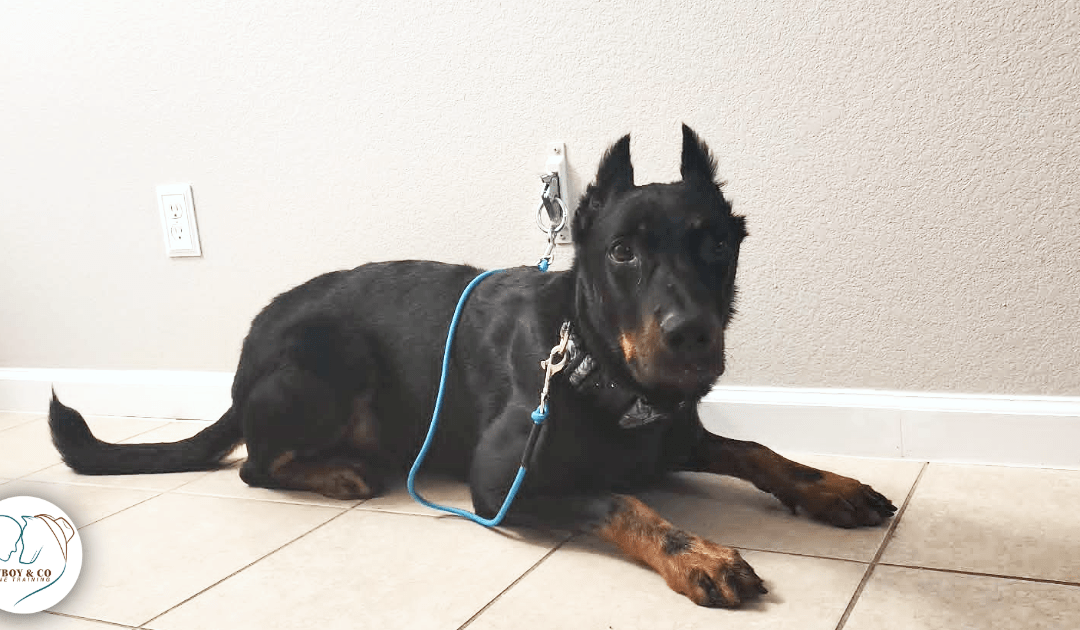
A recent Facebook post about a wall-mounted tether system went way further than I expected — and I mean it blew up. Some people loved it, some had questions, and a few jumped straight to worst-case scenarios. So let's back up and talk about tethering: what it is, what it isn't, and how it can make a real difference to a dog.
Tethering is for Training
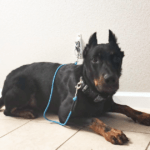
Let’s hit the big concern first: tethering doesn’t replace a crate and you can’t tether your dog and leave them. A tethered dog is never alone. I'm either in the room working with them, or at a small distance keeping an eye on things. The point of tethering is training. It teaches them to settle, to stay close, and to be part of what's happening without getting underfoot or getting into trouble. The important thing there is that you never leave a dog alone after you tether them.
The same goes for safety and security. Before I bring another dog into the room while I have one tethered — say, tethering one dog while I actively work with another — I've checked that the anchor point is solid. I’ll never skip that step because I’m in a hurry. This setup makes it possible to safely work with a reactive dog: the other dog stays tethered and settled while I'm giving my full attention to training. Remember, I am the only trainer at Cowboy & Co, so sometimes I need an extra pair of hands. Tethering offers that.
Stationary Tethering
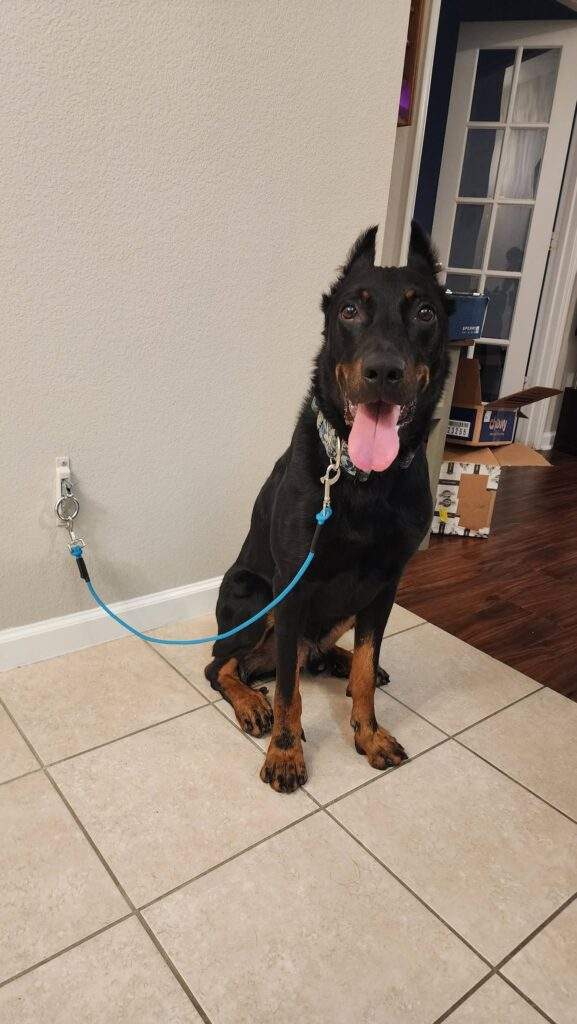
In stationary tethering, the dog is anchored to a fixed spot — a wall, a table leg, a door — while I'm awake and present in that space. The dog learns to settle near me without needing my direct attention, and just as important, it keeps them safe while they're awake and I've got my hands full. Some people use this in a way you may not expect: they keep something like this right outside a door, so they can hook the dog up for a minute while they run in and grab their keys or bring in groceries. It gives them a safe place to leave their dog while they do something else quickly.
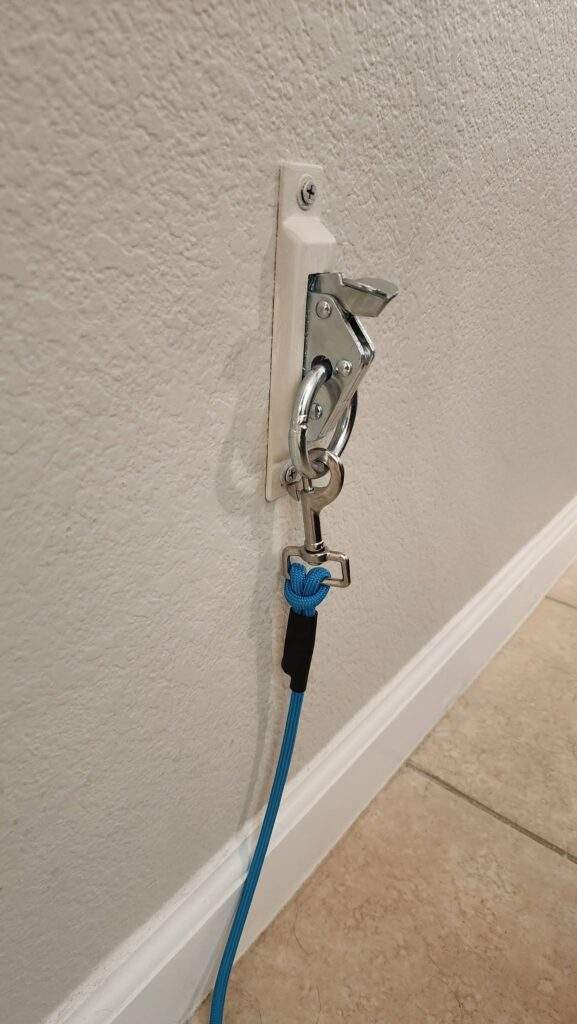
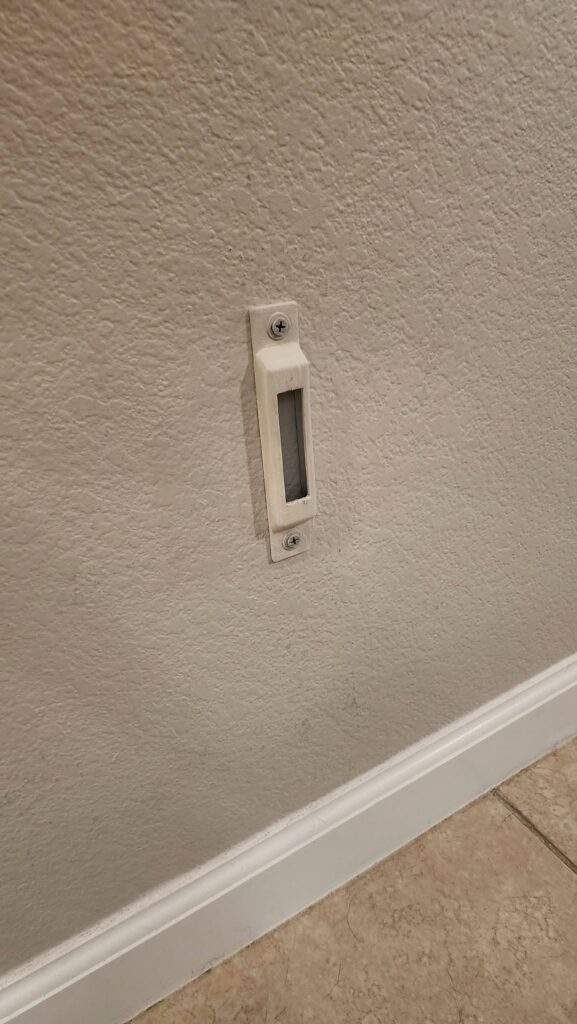
There’s more than one way to set up a tether! While the hardware I used is one option, there are many more available. Eye bolts are the classic version — solid, but they stick out, and I've caught a leg on one more than once. D-rings that fold down when they're not in use solve some of that, though they still stand out visually. The e-track setup I posted about is the one I landed on for my own walls, mainly because it's low-profile, extremely sturdy, and paints to match.
But you don't need to drill a single hole to do this. I've used a 10-pound weight — the kind made for canopies and tents — and just tied a leash around it. If I need more resistance for a bigger or stronger dog, I'll stack a couple. I've tethered to a table leg, a couch, a door. All of it works, as long as it's heavy enough or secure enough that the dog can't drag it around. That matters most for anyone renting, or anyone who doesn't want holes in a wall.
Here's the hardware I used:
Tethering to a Person
Tethering to a person — sometimes called the umbilical method — is a different tool with a different job. The dog is clipped to me, usually at my belt, and goes wherever I go for a stretch of time. This is especially useful for puppies. They learn to stay oriented to me instead of wandering off and getting into trouble.
This payoff is quick. House training gets easier because I catch the signals before an accident happens. A puppy learns that being close to me doesn't mean I’m going to entertain them and that impulse control lesson is vital. And for a puppy still figuring out what's furniture and what's a chew toy, staying attached to me for a chunk of the day means fewer opportunities to make a mistake I’ll have to fix later.
The Benefits of Tethering (No Matter Which Method)
Whether you tether your dog to a wall or to you, the two aren't mutually exclusive. Plenty of dogs have never, ever been tethered with either method. However, the two methods support similar outcomes, such as impulse control and self-soothing. You can also:
- Tether a puppy (or dog) while you leave the front door open to go to and from the car
- Show dogs they don't have to maul every visitor
- Begin to teach the "place" cue easily
"I'm not a professional, but with Johnny I used a regular leash and kept it and him with me all the time for about the first month after I adopted him. Now, if he's having trouble settling down at home I can just clip the leash to his collar and he will settle and lay down. It doesn't need to be clipped to anything, it's just the leash itself is the cue."
— Kenzie
A Few Things to Always Check
Regardless of how I’m tethering, a few things are non-negotiable. I don't use a slip lead where a dog can choke themselves by continuing to pull. But I’m also watching for signs of stress, if a dog is fighting the tether and cannot settle, they’re probably losing the lesson.
Also important: The tether line should only be long enough to let your dog stand up, turn around, and lie down again. Any longer and you risk your dog running to the end and actually breaking the hardware away from the wall.
Sometimes, I'll use a 6-foot leash as a tether, but it really depends on the circumstances and whether I feel like it's what the dog needs and is safe.
I'm Not the Only One Who Tethers Dogs
What surprised me most about the response to that post was how many other trainers and dog owners had already been doing some version of this on their own, often for years, with setups I'd never have thought of. One person's been using a wood block wrapped in sheep's wool with a coated tie-out wire run under a closed door. Someone else uses a ceiling mount attached to a wall stud with a swing hook. A few people are using heavy-duty suction cups so they can move the anchor point around as needed. One woman told me she'd been tethering in her own home for ten years and always figured she was one of the only ones doing it — until she saw how many people showed up in the comments doing the exact same thing.
That's the part worth thinking about. This isn't some fringe idea I invented. It's a tool a lot of experienced dog people already use because it works. If it's new to you, that's fine — welcome to the conversation.
Discover more from Cowboy & Co Canine Training
Subscribe to get the latest posts sent to your email.




The Marin County Humane Society, in CA, has a handout on the benefits and ways to use a tie-out!!! I pass it out to my clients a lot!!!!